
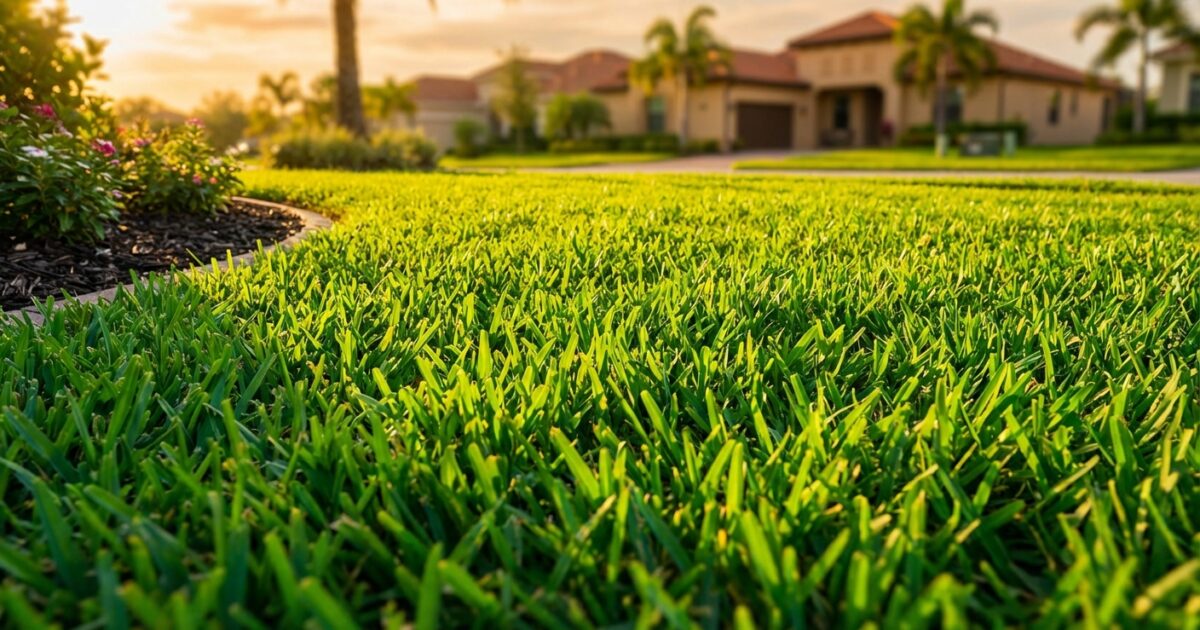
Your beautiful St. Augustine grass lawn requires proactive protection against weeds, and pre-emergent herbicides are your most powerful weapon. These specialized products prevent weed seeds from germinating, stopping problems before they start rather than fighting established weeds later. Understanding how to use pre-emergent weed control properly will save you time, money, and frustration while maintaining the thick, lush lawn that makes St. Augustine grass so desirable.
Understanding Pre-Emergent Herbicides
Pre-emergent herbicides create an invisible barrier in the top layer of your soil that prevents weed seeds from successfully germinating. Unlike post-emergent herbicides that kill existing weeds, these products work by disrupting the cellular development of germinating seeds. When applied correctly, they can prevent up to 85% of annual weeds from establishing in your lawn.
The key to pre-emergent success lies in timing. You must apply these products before weed seeds germinate, typically when soil temperatures reach specific thresholds. Once weeds have already sprouted, pre-emergent herbicides become ineffective, and you’ll need to switch to post-emergent treatments.
St. Augustine grass presents unique challenges because it’s more sensitive to certain herbicide ingredients than other warm-season grasses. Many pre-emergent products that work well on Bermuda or Zoysia grass can damage or discolor St. Augustine, making product selection crucial.
Safe Pre-Emergent Products for St. Augustine Grass
Several active ingredients have proven safe and effective for St. Augustine grass when used according to label directions:
Prodiamine-Based Products
Prodiamine is widely considered the gold standard for St. Augustine grass pre-emergent control. This active ingredient provides excellent crabgrass and annual bluegrass prevention while being gentle on your established turf. Popular prodiamine products include Barricade and various generic formulations available at major retailers.
Pendimethalin Options
Pendimethalin offers another St. Augustine-safe choice, though it requires more careful application timing. This ingredient works particularly well against grassy weeds and is often found in combination fertilizer products. Pendimethalin typically costs less than prodiamine but may not last quite as long in the soil.
Dithiopyr Formulations
Dithiopyr provides both pre-emergent and early post-emergent activity, giving you a slightly wider application window. This ingredient can control crabgrass that has already germinated but hasn’t yet established its second leaf. Products containing dithiopyr are often marketed as “dimension” herbicides.
Combination Products
Many manufacturers offer fertilizer-herbicide combinations specifically formulated for St. Augustine grass. These products typically contain prodiamine or pendimethalin along with slow-release nitrogen fertilizer, allowing you to feed your lawn while preventing weeds in a single application.
Application Timing by Region
Successful pre-emergent application depends heavily on your location and local growing conditions:
South Florida and Extreme South Texas
Apply your first pre-emergent treatment in mid-February when soil temperatures consistently reach 55-60°F. Plan a second application in late May or early June to maintain protection through the summer growing season. The year-round growing season in these areas often requires three applications annually.
Central Florida and Gulf Coast
Time your initial application for early March, with a follow-up treatment in early June. Monitor local weather patterns, as unusually warm winters may require earlier application. Many successful homeowners in this region apply pre-emergent just before their first spring fertilizer application.
North Florida, Georgia, and Alabama
Plan your first application for mid to late March, when forsythia bushes begin blooming—a reliable natural indicator of proper soil temperature. Apply the second treatment in mid-June to maintain season-long protection.
Seasonal Timeline
- Late Winter: Begin monitoring soil temperatures and weather forecasts
- Early Spring: Apply first pre-emergent treatment based on your region
- Late Spring: Evaluate effectiveness and spot-treat any breakthrough weeds
- Early Summer: Apply second pre-emergent treatment for sustained protection
- Fall: Consider a third application in extreme southern regions
Where to Purchase Pre-Emergent Products
You’ll find pre-emergent herbicides at multiple retail locations, each with distinct advantages:
Home Depot and Lowe’s offer the widest selection of consumer-grade products, competitive pricing, and frequent sales. Their garden centers typically stock both granular and liquid formulations, plus combination fertilizer products. Staff knowledge varies significantly between locations.
Local garden centers and nurseries often carry professional-grade products not available at big box stores. Their staff generally provides more knowledgeable advice about local conditions and application timing. Prices may be higher, but product quality is often superior.
Farm supply stores like Tractor Supply Co. stock larger quantities at lower per-unit costs, making them ideal if you’re treating extensive lawn areas. They often carry both homeowner and commercial formulations.
Online retailers provide access to professional products and bulk quantities, often with detailed product information and customer reviews. Consider shipping costs when comparing prices, especially for heavy granular products.
Application Instructions and Safety
Proper application technique ensures maximum effectiveness while protecting your St. Augustine grass:
Granular Application
Use a calibrated broadcast spreader for even distribution. Apply granular products to dry grass, then water thoroughly within 24 hours to activate the herbicide barrier. Most products require 0.25 to 0.5 inches of water for proper activation.
Liquid Application
Mix liquid concentrates according to label directions using a pump sprayer or hose-end sprayer. Apply during calm weather to prevent drift onto desirable plants. Liquid applications often provide more precise coverage but require more time for large areas.
Safety Precautions
Always read and follow label instructions completely. Wear protective clothing including long sleeves, pants, and gloves during application. Keep children and pets off treated areas until the product has been watered in and the lawn is dry. Store unused products in their original containers away from children and pets.
Common Application Mistakes
Avoid these frequent errors that reduce pre-emergent effectiveness:
Applying too late: Pre-emergent herbicides cannot control already-germinated weeds. Missing the application window by even two weeks can significantly reduce effectiveness.
Inadequate watering: Most pre-emergent products require thorough watering for activation. Insufficient irrigation leaves the herbicide sitting on the grass blades rather than creating a soil barrier.
Over-application: Using more product than recommended won’t improve results and may damage your St. Augustine grass. Always follow label rates precisely.
Uneven coverage: Missed spots become weed hotspots later in the season. Calibrate your spreader properly and maintain consistent walking speed during application.
Ignoring weather: Heavy rainfall immediately after application can wash away granular products before they activate. Monitor weather forecasts and adjust timing accordingly.
Cost Considerations and Budget Options
Pre-emergent herbicide costs vary significantly based on active ingredient, coverage area, and product quality:
Budget-friendly options include generic pendimethalin products, which typically cost $25-40 for 5,000 square feet of coverage. These products provide effective weed prevention at lower cost but may require more frequent applications.
Mid-range choices like prodiamine-based herbicides cost $40-60 for similar coverage but offer longer-lasting protection and better performance against tough weeds like crabgrass.
Premium products including combination fertilizer-herbicides or professional-grade formulations cost $60-100 but provide convenience and extended control. These often prove most cost-effective for homeowners seeking simplified lawn care.
Calculate costs on a per-square-foot basis rather than package price. Professional application services typically charge $75-150 per treatment, making DIY application significantly more economical for most homeowners.
Integration with Overall Lawn Care
Pre-emergent weed control works best as part of a comprehensive St. Augustine grass maintenance program:
Coordinate with fertilization: Many homeowners apply pre-emergent herbicides two weeks before their first spring fertilizer application. This timing ensures weed prevention is active when grass begins its active growing season.
Plan around overseeding: Pre-emergent herbicides prevent all seeds from germinating, including grass seed. Avoid overseeding for 10-16 weeks after application, depending on the product used.
Maintain proper mowing: Keep your St. Augustine grass at the recommended 3.5-4 inch height to promote thick growth that naturally suppresses weeds. Dense turf reduces the need for herbicide applications over time.
Address soil health: Healthy soil supports vigorous grass growth, reducing weed pressure naturally. Consider soil testing and appropriate fertilization to complement your pre-emergent program.
Regular pre-emergent herbicide applications form the foundation of successful St. Augustine grass weed management. By choosing appropriate products, timing applications correctly, and integrating treatments with proper lawn care practices, you’ll maintain the beautiful, weed-free lawn that enhances your home’s curb appeal and property value. Start planning your pre-emergent program now, and you’ll enjoy the results throughout the growing season.