
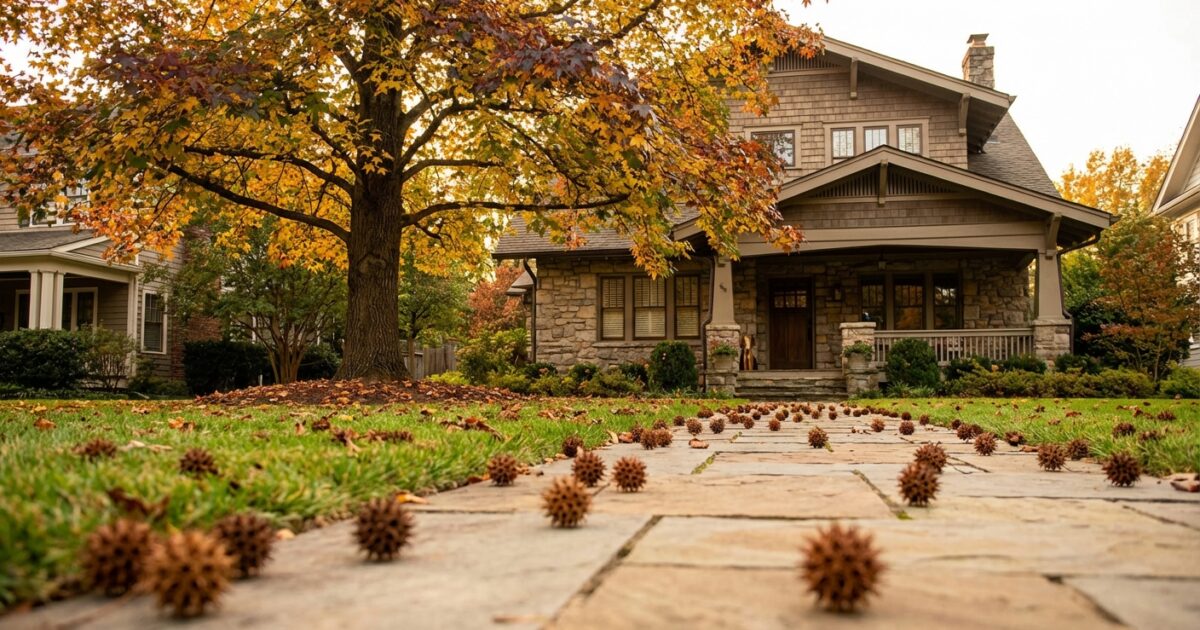
If you’ve recently moved into a home with sweet gum trees, you’ve likely discovered one of suburbia’s most notorious yard maintenance challenges: sweet gum balls. These spiky, golf ball-sized seed pods carpet your lawn each fall, creating a painful obstacle course that can make yard work and outdoor activities miserable. The good news is that with the right approach, tools, and timing, you can manage this annual challenge effectively.
Understanding Sweet Gum Trees and Their Spiky Seed Pods
Sweet gum trees (Liquidambar styraciflua) are native to eastern North America and prized for their stunning fall foliage that ranges from yellow and orange to deep red and purple. These fast-growing trees can reach heights of 60 to 75 feet and live for over 100 years. However, their beauty comes with a price: the infamous sweet gum balls.
These spiky seed pods, technically called “syncarp,” develop from the tree’s flowers and mature throughout the summer. Each ball contains dozens of seeds and features a hard, woody exterior covered in sharp points. The trees begin producing these seed pods when they’re around 20 to 25 years old, and mature trees can drop thousands of balls each season.
The timing of sweet gum ball drop varies by region and weather conditions, but typically occurs from late fall through early winter. Wind, rain, and temperature changes trigger the release, which means you’ll find fresh balls on your lawn for several months rather than all at once.
Manual Collection Methods
Hand-picking sweet gum balls is the most thorough method, though it’s also the most time-consuming. You’ll achieve the best results by collecting balls regularly rather than waiting for all of them to fall. This prevents them from working their way deep into your grass where they become harder to see and collect.
Wear sturdy gloves to protect your hands from the sharp spikes, and consider using a small bucket or bag to collect the balls as you work. Some homeowners find success using a long-handled grabber tool to reduce bending and speed up the process. While manual collection takes time, it’s free and allows you to inspect your lawn closely for other issues like bare spots or pest problems.
Specialized Sweet Gum Ball Collection Tools
Several tools are designed specifically for sweet gum ball cleanup, and investing in the right equipment can dramatically reduce your effort and time.
Nut Wizards and Rolling Collectors
The Bag-A-Nut Sweet Gum Ball Harvester and similar rolling collectors feature wire cages that you push across your lawn. The cage design allows the balls to fall into the collector while leaving grass and leaves behind. These tools work best on relatively flat terrain and short to medium grass heights. You’ll typically pay $40 to $80 for a quality rolling collector, and they can cut your collection time in half.
Push-Type Lawn Sweepers
Lawn sweepers use rotating brushes to lift sweet gum balls, leaves, and other debris into a collection hopper. They’re particularly effective for large properties and can handle multiple types of yard debris simultaneously. Quality push sweepers range from $100 to $300, while tow-behind models for riding mowers cost $200 to $500. The investment makes sense if you have a large yard or multiple cleanup tasks throughout the year.
Shop Vacuums and Leaf Blowers
Powerful shop vacuums can suck up sweet gum balls, though you’ll need a model with sufficient power and a wide hose. Leaf blowers work well for moving balls to a central collection area, especially when dealing with balls scattered across driveways, patios, and walkways. However, blowers won’t pick up the balls for you – they’re best used in combination with other collection methods.
Timing Your Cleanup Strategy
Your cleanup schedule significantly impacts the difficulty and effectiveness of sweet gum ball management. Understanding the seasonal pattern helps you plan more efficiently.
Start monitoring your trees in early fall as the balls begin changing from green to brown. This color change indicates they’re nearing maturity and will soon begin dropping. Plan your first major cleanup for late fall when approximately half the balls have fallen. This timing prevents the balls from settling deep into your grass while avoiding the need for daily cleanup.
Continue with weekly or bi-weekly collections through winter until all balls have dropped. In many regions, sweet gum trees continue dropping balls intermittently until late winter or early spring. Regular cleanup prevents the balls from becoming embedded in snow or working their way down into dormant grass where they’re difficult to remove.
Alternative Cleanup Methods
Mowing Over Sweet Gum Balls
Some homeowners attempt to solve the problem by mowing over the balls to chop them up. While this can work with a powerful mower, it’s generally not recommended. The balls can damage mower blades, and the chopped pieces often remain visible and can still be uncomfortable underfoot. Additionally, the fragments may prevent grass growth in spring by creating a barrier layer.
Raking Techniques
Standard rakes aren’t ideal for sweet gum balls because the balls tend to roll away or get pushed around rather than collected. However, landscape rakes with wider spacing between tines can be effective for gathering balls into piles for collection. Follow up with manual pickup or use a scoop shovel to transfer the piles into collection bags.
What to Do with Collected Sweet Gum Balls
Once you’ve collected thousands of sweet gum balls, you need a disposal or utilization plan. Simply throwing them in the trash isn’t always practical due to the volume involved.
Composting Considerations
Sweet gum balls can be composted, but they break down very slowly due to their woody nature. If you choose this route, break or crush the balls first to speed decomposition, and mix them with plenty of green organic matter. Expect the composting process to take two to three years.
Creative and Practical Uses
Many homeowners find alternative uses for their sweet gum ball collections. They make excellent fire starters for fireplaces and fire pits – the spiky surface catches easily and burns well. Some craft enthusiasts use them for holiday decorations, bird feeder bases, or garden mulch in areas where you want to discourage foot traffic.
You can also use sweet gum balls as a natural pest deterrent around garden beds. The spiky texture discourages many animals from walking through treated areas, though you’ll need to replace them periodically as they weather and decompose.
Prevention and Long-Term Management
Tree Removal Considerations
If sweet gum ball cleanup becomes overwhelming, tree removal might seem like the obvious solution. However, this decision requires careful consideration of the tree’s benefits, removal costs, and landscape impact.
Mature sweet gum trees provide significant environmental benefits including air purification, cooling shade, and wildlife habitat. Professional removal of a large sweet gum tree typically costs $800 to $1,500, depending on size, location, and access difficulty. You’ll also need to address the resulting gap in your landscape design.
Growth Regulation Options
Some homeowners explore chemical treatments to reduce sweet gum ball production. Products containing naphthaleneacetic acid (NAA) can reduce flowering and subsequent seed pod development when applied correctly. However, these treatments require precise timing, proper application, and may need annual reapplication. Consult with a certified arborist before attempting chemical regulation.
Professional Services and When to Get Help
Professional landscape maintenance companies often offer sweet gum ball cleanup services, particularly in areas where these trees are common. Expect to pay $200 to $500 for professional cleanup of a typical residential property, depending on tree size and ball density.
Consider professional help if you have multiple large sweet gum trees, physical limitations that make cleanup difficult, or simply prefer to invest your time in other activities. Many companies offer seasonal contracts that include fall cleanup services along with other yard maintenance tasks.
Long-Term Landscape Planning
If you’re planning landscape modifications or additions, consider the impact of your sweet gum trees on future maintenance. Avoid planting low groundcovers directly under sweet gum trees where balls will be difficult to remove. Instead, consider bark mulch, decorative stones, or hardy perennials that can tolerate having balls fall among them.
When planning patios, walkways, or play areas, account for the sweet gum ball drop zone, which typically extends beyond the tree’s canopy line. Position high-traffic areas outside this zone when possible, or plan for more frequent cleanup in these spaces.
Managing sweet gum balls is an ongoing commitment, but with the right tools, timing, and strategy, you can minimize the impact on your yard enjoyment. Whether you choose manual collection, invest in specialized equipment, or hire professional services, consistency is key to staying ahead of this annual challenge. Remember that sweet gum trees offer significant benefits beyond their problematic seed pods – proper management allows you to enjoy their beauty without dreading the cleanup season.