
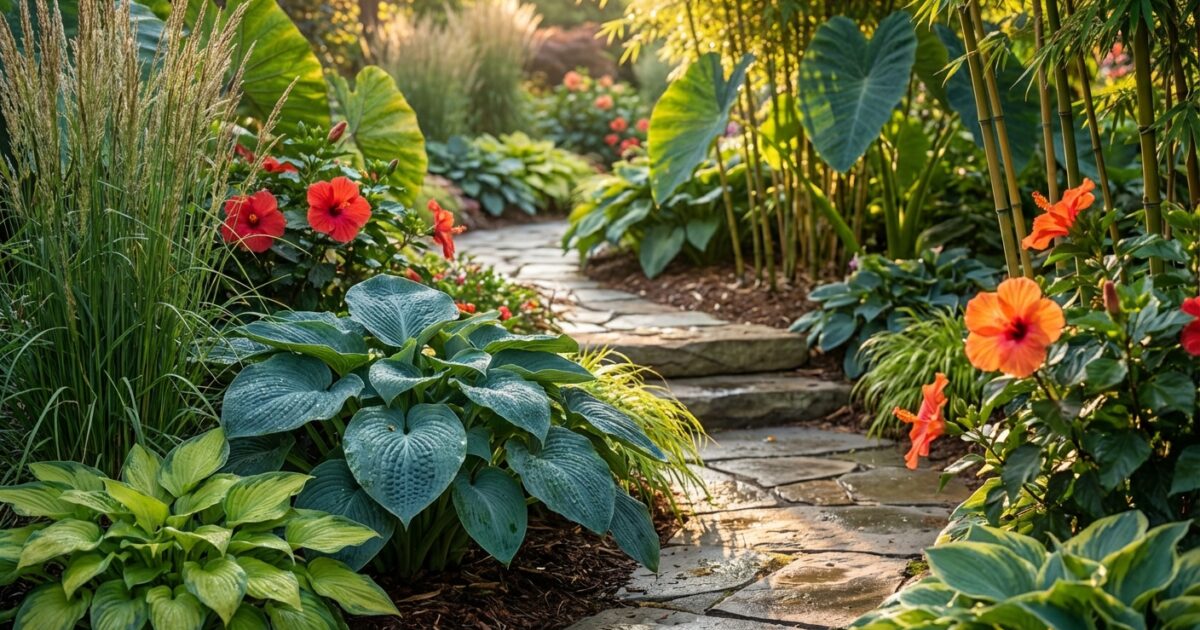
The allure of tropical landscapes—with their lush foliage, bold textures, and exotic blooms—doesn’t have to remain a distant dream for homeowners in cold climates. You can successfully create a stunning tropical paradise in zones 3-6 by selecting the right cold-hardy plants that mimic the dramatic appeal of their warm-weather counterparts. This approach to landscaping transforms ordinary northern gardens into extraordinary outdoor retreats that transport you to far-off destinations without leaving your backyard.
Why Cold Climate Tropical Landscaping Works
Tropical-style landscaping in cold climates succeeds because it focuses on recreating the visual elements that make tropical gardens so captivating: oversized leaves, architectural plant forms, bold colors, and layered textures. Many plants native to temperate regions naturally possess these tropical characteristics, having evolved similar features for different environmental reasons. When you group these plants strategically, you create the same lush, jungle-like atmosphere that defines tropical landscapes.
The key lies in understanding that tropical aesthetics stem from specific design principles rather than requiring actual tropical plants. Large-leafed hostas can provide the same visual impact as elephant ears, while hardy hibiscus delivers exotic blooms comparable to their tropical cousins. This approach allows you to enjoy tropical beauty while working within your climate’s natural constraints.
Essential Cold-Hardy Plants for Tropical Appeal
Large-Leafed Foundation Plants
Giant Hostas (Hosta sieboldiana varieties) form the backbone of cold-climate tropical gardens. Varieties like ‘Sum and Substance’ and ‘Empress Wu’ produce leaves up to 18 inches across, creating the bold foliage mass essential to tropical aesthetics. These perennials thrive in partial shade and return reliably each spring in zones 3-9. Plant them in rich, well-draining soil and provide consistent moisture during the growing season.
Gunnera (Gunnera manicata) produces the largest leaves of any hardy perennial, with individual leaves reaching 6 feet across. While technically hardy only to zone 7, you can overwinter it in colder zones by covering the crown with mulch and the plant’s own cut-down leaves. This dramatic specimen plant requires consistently moist soil and partial shade to thrive.
Ligularia (Ligularia dentata) varieties like ‘Britt-Marie Crawford’ offer large, rounded leaves with purple undersides that flutter in the breeze, mimicking tropical foliage movement. Hardy to zone 4, these plants prefer moist, partially shaded locations and produce tall spikes of yellow flowers that add vertical interest.
Architectural Specimens
Hardy Banana Plants (Musa basjoo) survive winters in zone 6 with proper protection and zones 7-10 without assistance. These fast-growing plants can reach 12 feet tall in a single season, producing the classic tropical silhouette with their large paddle-shaped leaves. Cut them to ground level after the first frost and mulch heavily for winter protection.
Castor Bean (Ricinus communis) grows as an annual in cold climates but provides instant tropical drama with its large, palmate leaves and exotic seed pods. These fast-growing plants can reach 8 feet tall in one season and self-seed readily. Note that all parts of this plant are poisonous, so avoid planting it where children or pets frequent.
Hardy Bamboo (Fargesia species) creates tropical atmosphere with its graceful, arching canes and rustling leaves. Clumping varieties like Fargesia nitida and F. rufa stay contained and survive in zones 4-9. Plant bamboo in well-draining soil and provide wind protection in exposed locations.
Colorful Bloomers
Hardy Hibiscus (Hibiscus moscheutos) produces dinner-plate-sized flowers in vibrant tropical colors throughout summer and fall. These perennials die to the ground each winter but return reliably in zones 4-9. Varieties like ‘Luna Red’ and ‘Summerific Perfect Storm’ offer the same exotic appeal as tropical hibiscus with superior cold tolerance.
Cannas (Canna varieties) provide tropical flair with their large leaves and bright flower spikes. While the rhizomes must be dug and stored indoors in zones 3-7, their dramatic summer performance justifies the extra effort. Choose varieties with bronze or purple foliage for added tropical appeal.
Crocosmia (Crocosmia cultivars) produces arching sprays of orange and red flowers reminiscent of tropical birds-of-paradise. Hardy to zone 5, these bulbs multiply readily and create naturalized drifts over time. Plant them in well-draining soil and divide clumps every few years.
Textural Additions
Fatsia (Fatsia japonica) offers glossy, hand-shaped leaves that scream tropical sophistication. While typically hardy only to zone 8, you can grow it in containers and move it indoors for winter in colder zones. This evergreen shrub tolerates deep shade and provides year-round structure.
Rodgersia (Rodgersia species) produces large compound leaves with pronounced veining that mimics tropical foliage. Hardy to zone 5, these perennials prefer moist, partially shaded conditions and produce feathery flower plumes in early summer.
Astilboides (Astilboides tabularis) creates tropical impact with its enormous, umbrella-shaped leaves that can reach 3 feet across. This shade-loving perennial thrives in zones 4-7 and produces tall spires of creamy flowers in summer.
Design Principles for Tropical-Style Gardens
Creating authentic tropical ambiance requires strategic plant placement and design thinking. Layer plants at different heights to create the jungle-like density characteristic of tropical environments. Place your largest specimens—like hardy bananas or giant hostas—as focal points, then surround them with medium-sized plants and ground-level fillers.
Embrace bold color combinations that you might typically avoid in traditional landscaping. Pair burgundy-leafed heucheras with chartreuse hostas, or combine orange crocosmia with purple-leafed cannas. Tropical gardens celebrate vibrant contrasts that create visual excitement and energy.
Incorporate hardscaping elements that enhance the tropical theme. Use large stones or boulders to create naturalistic arrangements, install a water feature for the sound of moving water, and consider adding a tiki torch or colorful outdoor furniture to complete the paradise atmosphere.
Create microclimates by grouping plants with similar needs and using larger specimens to provide wind protection for more delicate plants. This approach allows you to push the boundaries of plant hardiness while maintaining a cohesive design aesthetic.
Seasonal Care and Winter Protection
Success with cold-climate tropical gardening requires understanding seasonal care requirements. During the growing season, maintain consistent soil moisture and feed plants regularly with balanced fertilizer to promote the lush growth essential to tropical aesthetics.
As autumn approaches, begin preparing tender plants for winter. Cut back herbaceous perennials after the first hard frost, but leave ornamental grasses and plants with interesting seed heads for winter structure. Dig and store canna rhizomes, dahlia tubers, and other tender bulbs in a cool, dry location.
Protect marginally hardy plants like hardy bananas by cutting them back and covering the roots with thick mulch or burlap. Create windbreaks around bamboo and other evergreen elements to prevent winter desiccation.
For container plants that you move indoors, gradually acclimate them to indoor conditions by bringing them into a garage or unheated sunroom before moving them to their final winter location. Many tropical-looking plants can overwinter in cool, bright basements or sunrooms.
Budget Considerations and Plant Sources
Creating a tropical paradise doesn’t require breaking your budget. Start small with a few key specimens and expand your garden over time. Many tropical-looking plants, particularly perennials like hostas and astilbe, can be divided to create new plants for other garden areas.
Source plants from local nurseries when possible, as they’re more likely to carry varieties suited to your specific climate zone. Mail-order specialists often offer the widest selection of unusual varieties, particularly for plants like hardy bananas and exotic hibiscus cultivars.
Consider growing annual tropical-looking plants from seed to save money while experimenting with different varieties. Castor beans, coleus, and many ornamental grasses grow easily from seed and provide instant tropical impact.
Join local gardening groups or online plant swaps to trade divisions and cuttings with other gardeners. Many tropical-looking perennials multiply quickly and experienced gardeners often have extras to share.
Transformation Impact and Home Value
A well-designed tropical-style landscape creates immediate visual impact that sets your property apart from typical northern gardens. The bold, lush appearance attracts attention and creates a memorable first impression that can significantly boost curb appeal.
This unique landscaping approach often increases property value by creating outdoor living spaces that feel like private resort destinations. Potential buyers appreciate the exotic atmosphere and the obvious care invested in creating something special.
The dramatic seasonal transformation from winter dormancy to lush summer growth provides ongoing enjoyment throughout the year. You’ll find yourself spending more time outdoors, entertaining guests, and simply enjoying the peaceful retreat you’ve created in your own backyard.
Beyond financial benefits, tropical-style landscaping provides psychological benefits by creating a sense of escape and relaxation. The lush environment can reduce stress and provide a daily reminder that paradise exists right outside your door.