
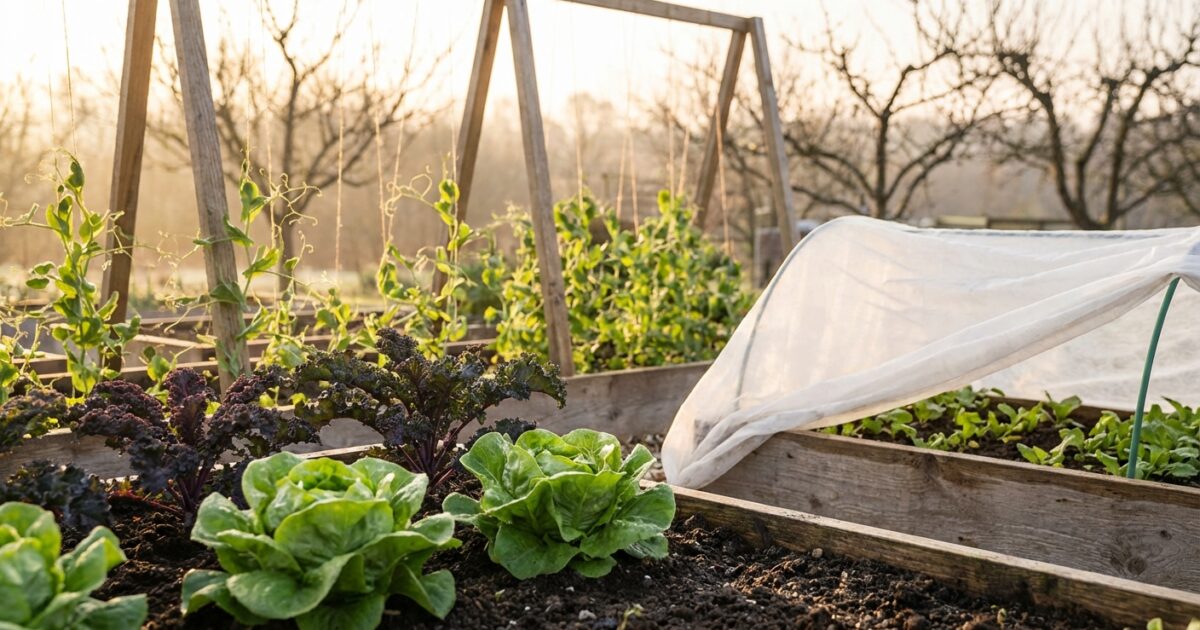
Starting your vegetable garden in February might seem ambitious, but you’ll discover that many crops actually prefer cool weather and can handle light frosts better than summer heat. Early season planting extends your growing season, gives you a head start on fresh produce, and often results in better-tasting vegetables that develop slowly in cool conditions.
Cold-Hardy Vegetables Perfect for February Planting
Your early garden success depends on choosing vegetables bred to handle cool temperatures and occasional frost. These hardy champions will establish strong root systems while temperatures remain moderate, positioning them for explosive growth when spring arrives.
Leafy Greens lead the charge for February plantings. Spinach, arugula, lettuce, and kale actually prefer temperatures between 50-70°F and can survive down to 25°F with minimal protection. Swiss chard and Asian greens like bok choy and mizuna also thrive in these conditions. Plant these crops in succession every two weeks to ensure continuous harvests through spring.
Root Vegetables establish slowly in cool soil but develop exceptional flavor. Radishes mature quickly and can handle temperatures as low as 25°F. Carrots, beets, and turnips grow steadily in cool weather, with many varieties becoming sweeter after experiencing light frost. Parsnips actually require cold exposure to develop their characteristic nutty flavor.
Brassica Family vegetables excel in early season conditions. Broccoli, cauliflower, and Brussels sprouts transplants can go into the ground when soil is workable. Cabbage develops best in cool weather, forming tight heads before hot weather arrives. These crops often struggle in summer heat, making early planting essential for success.
Peas and Fava Beans fix nitrogen in your soil while producing edible pods and shoots. Sugar snap peas, snow peas, and shell peas can germinate in soil as cool as 40°F. Fava beans tolerate even colder conditions and improve soil fertility for later plantings.
Regional Considerations and Timing
Your specific location determines your February planting window. In Pennsylvania, for example, the southeastern counties around Philadelphia typically experience last frost dates between mid-March to early April, while northern counties may see frost into early May. Check your local frost dates and work backward to determine your ideal planting schedule.
Soil temperature matters more than air temperature for seed germination. Use a soil thermometer to check ground temperature at planting depth. Most cool-season crops germinate when soil reaches 40-50°F, though germination speeds up significantly when soil warms to 60°F.
Microclimates in your yard create opportunities for even earlier planting. South-facing slopes warm faster than northern exposures. Areas near buildings or large stones benefit from radiated heat. You might successfully plant certain crops two weeks earlier in your yard’s warmest spots.
Protection Methods for Young Plants
Simple protection systems transform marginal conditions into successful growing environments. Row covers made from lightweight fabric create a greenhouse effect, raising temperatures by 4-8°F while allowing light and water penetration. Secure covers with landscape staples or weighted edges, ensuring fabric doesn’t touch plant leaves directly.
Burlap wraps provide excellent frost protection for individual plants or small groupings. Create mini-greenhouses by draping burlap over wire hoops or tomato cages. This method works particularly well for transplants of broccoli, cauliflower, and cabbage.
Wall-of-water systems and plastic milk jugs with bottoms removed create individual plant protectors. Fill water-filled tubes or place water-filled containers nearby to moderate temperature swings through thermal mass. Remove or vent these protectors during warm days to prevent overheating.
Cold frames extend your growing season dramatically. Build simple structures using old windows over raised beds, or purchase portable units. Cold frames can advance your planting schedule by 4-6 weeks and provide protection well into winter.
Container and Small-Space Solutions
Limited yard space doesn’t limit your early gardening possibilities. Container gardening offers excellent control over soil conditions and mobility to protect plants from severe weather. Choose containers at least 6-8 inches deep for leafy greens, 12 inches for root vegetables.
Vertical growing systems maximize production in minimal space. Install trellises for pea vines or create tower gardens using stacked containers with drainage holes. Wall-mounted planters work exceptionally well for lettuce and herbs in protected locations.
Raised beds warm faster than ground-level gardens and provide better drainage during wet February weather. Even a 4-inch raised bed experiences soil temperatures 5-10°F warmer than surrounding ground. Add black plastic mulch or clear plastic covers to warm soil even faster.
Window box gardens bring early vegetables within easy reach. South-facing windows provide ideal light exposure for lettuce, spinach, and herbs. You can easily move containers indoors during extreme weather events.
Soil Preparation and Growing Medium
February soil preparation requires patience since waterlogged soil compacts easily when worked too early. Test soil readiness by squeezing a handful—properly prepared soil crumbles rather than forming a muddy ball. Add organic matter like compost or aged manure to improve drainage and nutrient content.
For container gardening, choose high-quality potting mixes that drain well while retaining moisture. Avoid garden soil in containers, which becomes too heavy and doesn’t drain properly. Look for mixes containing perlite or vermiculite for improved aeration.
Cold-season vegetables prefer slightly alkaline soil with pH between 6.0-7.0. Test your soil pH and amend with lime if necessary, though limestone works slowly and should be applied several months before planting when possible.
Accessible Gardening Solutions
Physical limitations don’t prevent successful early season gardening. Raised beds at table height eliminate bending and kneeling while providing excellent drainage and soil warming. Standard height is 30-36 inches, but customize height to your comfort level.
Wide pathways between beds accommodate wheelchairs and walkers while providing stable surfaces during muddy spring conditions. Consider installing handrails along longer beds for additional stability.
Lightweight tools reduce strain on hands and wrists. Long-handled tools eliminate bending, while ergonomic grips reduce fatigue. Wheeled garden seats provide mobility and storage for tools and supplies.
Self-watering containers reduce daily maintenance while providing consistent moisture for young plants. These systems work particularly well for leafy greens and herbs that prefer consistent soil moisture.
Benefits of Early Season Planting
Early planting provides multiple advantages beyond simple schedule advancement. Cool-season crops develop better flavor and texture in moderate temperatures, often becoming bitter or tough when grown in summer heat. Lettuce, spinach, and peas grown in cool weather taste significantly better than heat-stressed plants.
Pest pressure remains minimal during early season growing. Many common garden pests haven’t emerged yet, giving your plants time to establish strong growth before facing insect challenges. Disease pressure also stays low in cool, dry conditions typical of late winter and early spring.
Extended harvest windows increase your garden’s productivity. By starting cool-season crops early and succession planting every 2-3 weeks, you’ll enjoy fresh vegetables from February through June, when heat-loving crops take over garden space.
Early gardens provide psychological benefits during winter’s end. Working with soil and watching seeds germinate lifts spirits and provides hope during dreary late-winter days. Fresh greens from your garden taste exceptional after months of store-bought produce.
Weather unpredictability requires flexible protection strategies. Keep row covers, burlap, and other protection materials readily available for sudden temperature drops. Monitor weather forecasts closely and be prepared to provide extra protection during cold snaps. Remember that established plants handle cold better than newly transplanted or recently germinated seedlings. With proper planning and protection, your February garden will reward you with fresh vegetables weeks before your neighbors begin planting, setting the foundation for a productive and satisfying growing season.