
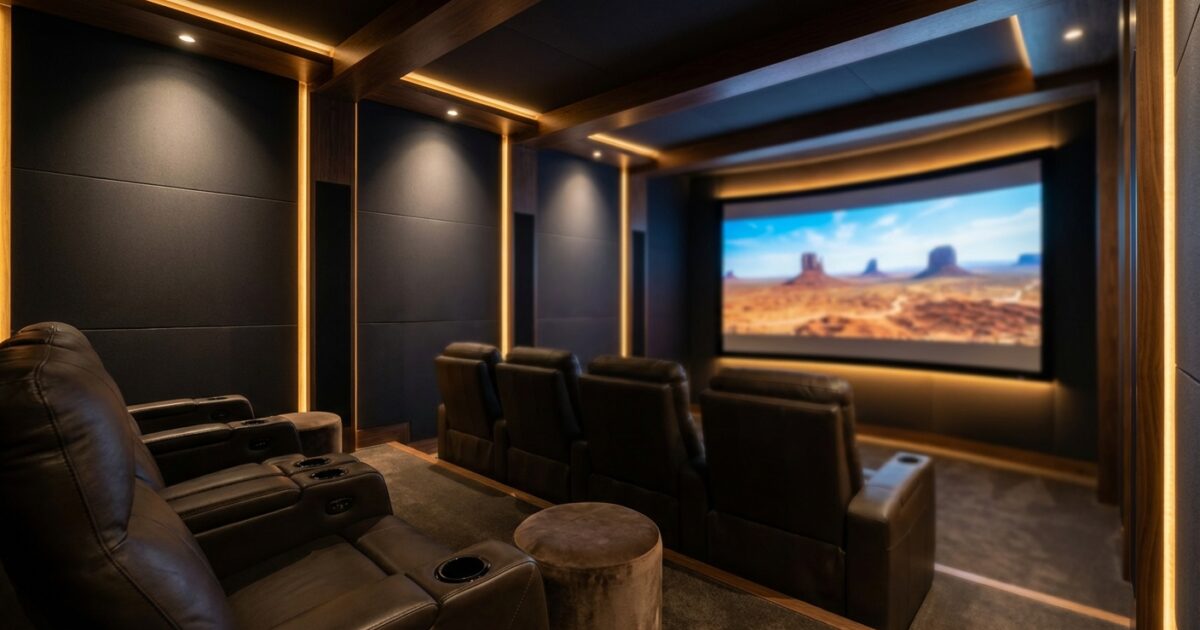
Planning your dream home theater becomes infinitely easier when you start thinking about it during the home buying process rather than after you’ve already moved in. Whether you’re house hunting or have recently closed on your new home, taking a strategic approach to your entertainment space will save you thousands of dollars and countless headaches down the road.
The key advantage of early planning lies in your ability to integrate infrastructure seamlessly into your home’s structure before walls are closed up and furniture is in place. This comprehensive guide will walk you through every aspect of home theater planning, from selecting the perfect room to future-proofing your investment.
Why Early Planning Makes All the Difference
When you plan your home theater during the buying or early ownership phase, you gain access to opportunities that simply won’t exist later. Running speaker wires through walls, installing dedicated electrical circuits, and optimizing room acoustics are all dramatically easier—and less expensive—when you can access the home’s structure freely.
Consider the cost difference: installing in-wall speakers during a renovation might cost $200 per speaker location, while retrofitting them into finished walls can easily cost $500 or more per location due to patching, painting, and additional labor. Multiply this across six to eight speaker locations, and you’re looking at substantial savings.
Early planning also allows you to negotiate home theater considerations into your purchase or renovation timeline. You can coordinate with electricians, low-voltage installers, and acoustic specialists while other contractors are already on-site, reducing overall project costs and minimizing disruption to your daily life.
Selecting the Perfect Room
Your room selection will determine 70% of your home theater’s success before you purchase a single piece of equipment. The ideal home theater room combines the right dimensions, minimal external noise, and flexibility for acoustic treatment.
Basement locations often provide the best foundation for serious home theaters. They typically offer excellent sound isolation, fewer windows to manage light control, and existing acoustically-favorable concrete walls. However, you’ll need to address moisture control and ensure adequate ceiling height—aim for at least eight feet after any dropped ceiling installation.
Dedicated ground-floor rooms work well if they’re positioned away from high-traffic areas and bedrooms. Look for rooms with minimal shared walls with neighbors if you’re in a townhome or semi-detached property. Rooms with carpet or the potential for carpet installation provide better acoustic properties than hard flooring.
Avoid rooms with large windows unless you’re committed to investing in quality blackout solutions. Also steer clear of irregularly shaped spaces—L-shaped or rooms with multiple alcoves create acoustic challenges that are expensive to solve.
When evaluating room dimensions, rectangular spaces with ratios close to 1.6:1 (length to width) tend to produce the most balanced acoustics. A 16-foot by 10-foot room, for example, provides excellent acoustics for most home theater setups.
Budget Planning and Smart Purchase Timing
Establishing a realistic budget early in your planning process prevents scope creep and helps you prioritize where to invest your money for maximum impact. A functional home theater can range from $3,000 for a basic setup to $50,000 or more for a luxury installation.
Break your budget into these categories:
- Infrastructure (30-40%): Electrical work, speaker wiring, network installation, acoustic treatment
- Display (25-35%): Projector or large-screen TV, mounting hardware
- Audio equipment (20-30%): Receiver, speakers, subwoofer
- Seating and comfort (10-20%): Theater seating, lighting, decor
Timing your purchases strategically can significantly stretch your budget. Major sales events occur predictably: Black Friday offers the deepest discounts on displays and receivers, while spring cleaning sales in March and April often feature excellent deals on high-end audio equipment. End-of-model-year clearances in late summer provide opportunities to purchase premium equipment at substantial discounts.
Consider purchasing components in phases aligned with your cash flow and installation timeline. Buy infrastructure materials first, then displays, followed by audio equipment, and finally comfort items like seating and decor.
Critical Infrastructure Requirements
Proper infrastructure installation forms the invisible backbone of any successful home theater. Getting these elements right during initial construction or renovation prevents costly retrofitting later.
Electrical Requirements
Plan for significantly more electrical capacity than you think you’ll need. Install at least four dedicated 20-amp circuits: one for your display, one for audio equipment, one for general room lighting and outlets, and one for future expansion. Consider adding a 240-volt outlet if you’re planning for a high-end projector that might require it.
Position outlets strategically around your planned seating area for device charging and occasional equipment. Install electrical boxes behind your planned display location and equipment rack to keep power cords hidden and organized.
Network Infrastructure
Run Cat6a or Cat7 ethernet cables to multiple locations throughout your theater room. Even if you plan to use wireless connections initially, having wired options provides more reliable performance for streaming 4K content and eliminates potential interference issues.
Install network drops at your equipment rack location, seating area, and display location. This flexibility allows you to optimize your network performance as your needs evolve.
Speaker Wiring and Audio Preparation
Install speaker wire runs to all planned speaker locations during construction. Use 14-gauge or 12-gauge oxygen-free copper wire for better performance and future flexibility. Plan for a 7.2 or 9.2 channel setup even if you’re starting with fewer speakers—adding the wiring now costs a fraction of retrofitting later.
Consider in-wall or in-ceiling speakers for surround channels to maintain clean sight lines and reduce visual clutter. Front left, center, and right channels typically perform better as traditional speakers, but plan the wiring to accommodate either option.
Equipment Selection for Different Budgets
Matching your equipment selection to your room size and budget ensures optimal performance without overspending on unnecessary features or underspending on critical components.
Budget-Conscious Setup ($3,000-$7,000)
Focus on a high-quality display and solid 5.1 audio system. A 65-75 inch 4K TV paired with a mid-range AV receiver and a complete 5.1 speaker package from a single manufacturer provides excellent performance and easy setup. Prioritize brands known for reliability and good customer support over cutting-edge features.
Mid-Range Setup ($7,000-$15,000)
This budget allows for either a quality projector setup or a premium large-screen TV, plus a 7.1 or 7.2 audio system with room for acoustic treatment. Consider separate amplifiers for front channels and invest in a quality subwoofer that can pressurize your room effectively.
Premium Setup ($15,000+)
High-end projectors, premium audio components, and comprehensive acoustic treatment become viable options. Focus on creating a truly immersive experience with technologies like Dolby Atmos, premium seating, and automated lighting control.
Regardless of budget level, invest proportionally more in components that are difficult to upgrade later, such as in-wall infrastructure and acoustic treatment.
Working with Contractors and Installers
Coordinating multiple trades during your home theater installation requires careful planning and clear communication. Start by identifying whether you need separate contractors for electrical work, low-voltage installation, and acoustic treatment, or if you can find an integrator who manages multiple trades.
Obtain detailed quotes that specify exactly what’s included in each contractor’s scope of work. Unclear boundaries between trades often lead to finger-pointing and additional costs when issues arise.
Schedule infrastructure work during your home’s rough construction or renovation phase when walls are open and access is easy. Finish work like mounting displays and connecting equipment should happen after painting and flooring are complete to avoid damage.
Consider hiring a certified home theater installer for complex setups. Look for professionals with certifications from organizations like CEDIA (Custom Electronic Design & Installation Association) who understand both the technical and aesthetic aspects of home theater design.
Future-Proofing Your Investment
Technology evolves rapidly, but thoughtful planning can help your home theater remain current and functional for many years. Focus on infrastructure that’s difficult to change rather than trying to predict specific future technologies.
Install more speaker wire runs than you currently need. Even if you start with a 5.1 system, having wiring for 9.2 channels allows easy expansion as your interest and budget grow. Similarly, run extra conduit between your equipment location and display area to accommodate future cable requirements.
Choose equipment with robust upgrade paths. AV receivers with pre-amp outputs allow you to add separate amplifiers later. Projector mounts that accommodate various sizes and weights provide flexibility as display technology advances.
Plan your equipment rack with 50% more space than you currently need. Home theater enthusiasts invariably add components over time, and having adequate space prevents expensive rack replacements.
Building your dream home theater during the home buying or early ownership phase provides unmatched advantages in cost, convenience, and final results. By planning thoughtfully, budgeting realistically, and focusing on solid infrastructure, you’ll create an entertainment space that provides years of enjoyment while adding significant value to your home. Remember that the best home theater is one that matches your viewing habits and space requirements—not necessarily the one with the most expensive components.