
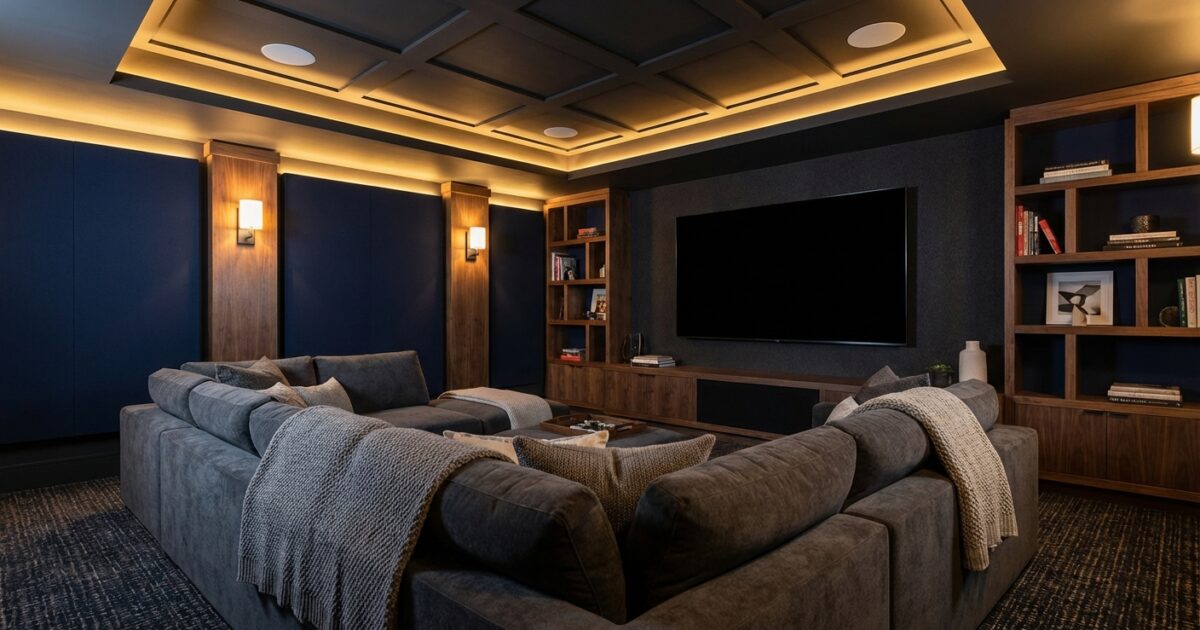
Dolby Atmos represents the next evolution in home entertainment, transforming how you experience movies, music, and games in your living space. Unlike traditional surround sound that moves audio around you in a horizontal plane, Dolby Atmos creates a three-dimensional sound environment that includes height, placing you directly inside the action.
This immersive audio technology has quickly become a sought-after feature among homeowners who want to elevate their entertainment experience. Whether you’re setting up your first home theater or upgrading an existing system, understanding Dolby Atmos will help you make informed decisions that enhance both your enjoyment and your home’s value.
Understanding Dolby Atmos Technology
Traditional surround sound systems use channels to direct specific sounds to designated speakers around your room. Dolby Atmos takes a different approach by treating sounds as objects that can be precisely placed and moved anywhere in three-dimensional space, including above your head.
This object-based audio creates incredibly realistic soundscapes. Rain falls from overhead, helicopters move across the ceiling, and ambient sounds envelop you from every direction. The technology automatically adapts to your specific speaker configuration, ensuring optimal performance whether you have a modest setup or an elaborate system.
For homeowners, this means you can start with a basic Dolby Atmos configuration and expand it over time without replacing your entire system. The technology scales beautifully from simple soundbar setups to complex multi-speaker installations.
Speaker Requirements and Configurations
Setting up Dolby Atmos requires specific speaker arrangements that differ from traditional surround sound. The system uses a numerical designation like 5.1.2 or 7.1.4, where the third number indicates height speakers that create the overhead audio layer.
Entry-Level Configurations
A 3.1.2 system provides your introduction to Dolby Atmos without overwhelming complexity. This configuration includes three front speakers (left, center, right), one subwoofer, and two height speakers. You’ll experience the dimensional audio effect while keeping installation manageable and costs reasonable.
For slightly larger rooms or enhanced experience, a 5.1.2 system adds rear surround speakers to create a more complete sound envelope. This configuration works well in most living rooms and provides excellent immersion for movies and gaming.
Advanced Configurations
Dedicated home theater rooms benefit from 7.1.4 or even 9.1.6 configurations. These setups include additional side speakers and multiple height channels that create incredibly precise audio positioning. The complexity increases significantly, but so does the immersive experience.
Consider your room size, budget, and commitment level when choosing your configuration. You can always start smaller and expand your system as your interests and budget allow.
Room Considerations and Acoustics
Your room’s physical characteristics dramatically impact your Dolby Atmos experience. Ceiling height, room shape, furniture placement, and surface materials all influence how sound travels and reflects throughout the space.
Optimal Room Dimensions
Rectangular rooms with 8-10 foot ceilings work best for most Dolby Atmos setups. Avoid perfectly square rooms if possible, as they can create standing waves that muddy the audio. If you’re working with challenging room dimensions, acoustic treatments can help optimize the sound quality.
Open floor plans present unique challenges and opportunities. While they offer flexibility in speaker placement, you’ll need to consider how sound travels to adjacent areas and whether family members in other spaces might be disturbed.
Acoustic Treatments
Hard surfaces like tile, hardwood, and bare walls create reflections that can interfere with Dolby Atmos precision. Strategic placement of rugs, curtains, upholstered furniture, and acoustic panels helps control these reflections without requiring major renovations.
Pay attention to the first reflection points – the spots on walls and ceiling where sound from your speakers first bounces before reaching your ears. These areas benefit most from acoustic treatment to maintain audio clarity.
Speaker Placement Strategies
Proper speaker placement makes the difference between good and exceptional Dolby Atmos performance. Each speaker serves a specific purpose and requires careful positioning to create the intended three-dimensional soundscape.
Height Speaker Options
You have two primary approaches for height speakers: ceiling-mounted speakers or upward-firing modules that sit on top of your existing speakers. Ceiling speakers provide the most accurate overhead effects but require installation and potential construction work.
Upward-firing speakers offer easier installation by bouncing sound off your ceiling to create height effects. They work well with flat, acoustically reflective ceilings but may not perform as precisely as dedicated ceiling speakers.
Working with Existing Furniture
Your seating arrangement significantly impacts speaker placement. Position your main listening area in the “sweet spot” where all speakers can properly reach your ears. This might mean adjusting furniture placement or choosing speakers that work well with your existing room layout.
Avoid placing speakers directly behind large furniture pieces that could block or absorb sound. If your room layout limits options, consider in-wall or in-ceiling speakers that provide flexibility without disrupting your décor.
Budget Planning for Every Homeowner
Dolby Atmos systems range from affordable to luxurious, allowing you to match your investment to your priorities and financial situation. Understanding the cost categories helps you plan effectively and avoid overspending or under-buying.
Budget-Conscious Approach
Dolby Atmos soundbars represent the most accessible entry point, typically ranging from several hundred to a few thousand dollars. These systems include all necessary components in a single package and often include wireless subwoofers and rear speakers.
While soundbars can’t match the precision of separate component systems, quality models provide genuine Dolby Atmos effects with minimal installation requirements. This approach works particularly well for renters or those who prefer simple setup.
Mid-Range Systems
Separate component systems in the mid-range category typically include a receiver, multiple speakers, and a subwoofer. These systems offer better performance and more flexibility than soundbars while remaining accessible to most homeowners.
Budget several thousand dollars for a quality mid-range system, including professional calibration. This investment provides excellent performance and room for future expansion without requiring complete system replacement.
High-End Installations
Custom installations with premium components can reach five figures or more, depending on room size and component quality. These systems often include architectural speakers, custom acoustic treatments, and professional design services.
High-end systems make sense for dedicated theater rooms or when home theater represents a primary hobby. The performance improvement over mid-range systems may not justify the cost increase for casual viewers.
DIY Versus Professional Installation
Deciding between self-installation and professional setup depends on your technical comfort level, time availability, and system complexity. Each approach offers distinct advantages that align with different homeowner situations.
DIY Installation Benefits
Installing your own system saves money and provides complete control over the process. Modern receivers include automatic room calibration features that simplify setup, and online resources provide extensive guidance for troubleshooting and optimization.
Start with simpler configurations if you choose the DIY route. A basic 3.1.2 or 5.1.2 system allows you to learn the technology without overwhelming complexity. You can always hire professionals later for expansion or fine-tuning.
Professional Installation Advantages
Professional installers bring experience, specialized tools, and industry knowledge that ensure optimal performance. They handle complex wiring, acoustic measurements, and system calibration while working within your home’s existing infrastructure.
Consider professional installation for in-wall or in-ceiling speakers, complex configurations, or when you lack time for extensive setup and troubleshooting. Many installers also provide ongoing support and system updates.
Future-Proofing Your Investment
Technology evolves rapidly, but smart planning helps ensure your Dolby Atmos system remains relevant and expandable for years to come. Focus on components and infrastructure that support future upgrades without requiring complete replacement.
Receiver Selection
Choose a receiver with more channels than your initial setup requires. This extra capacity allows system expansion without replacing the central component. Look for models that support the latest audio formats and offer regular firmware updates.
Ensure your receiver includes modern connectivity options like HDMI eARC, multiple HDMI inputs, and wireless capabilities. These features support current and future source devices without limiting your options.
Infrastructure Planning
Run extra speaker wire during initial installation, even if you don’t immediately need all channels. Fishing wire through finished walls later adds significant cost and complexity to system expansion.
Consider conduit or cable management systems that accommodate additional wiring for future upgrades. This preparation enables smooth expansion when you’re ready to enhance your system.
Adding Value to Your Home
A well-designed Dolby Atmos system can enhance your property’s appeal and value, particularly in markets where buyers prioritize entertainment features. Quality installations demonstrate attention to detail and modern amenities that distinguish your home from others.
Architectural speakers and thoughtful integration maintain your home’s aesthetic appeal while providing superior performance. This approach appeals to future buyers who want advanced features without visible equipment cluttering their living spaces.
Document your system specifications and provide operation guides to future buyers. Professional installation records and warranty information add credibility and value to your entertainment system investment.
Remember that your Dolby Atmos system should enhance your daily living experience first. Choose components and configurations that match your lifestyle and preferences, ensuring you’ll enjoy the system throughout your homeownership journey. The technology continues advancing, but a well-planned system provides years of exceptional entertainment while adding a distinctive feature to your home.