
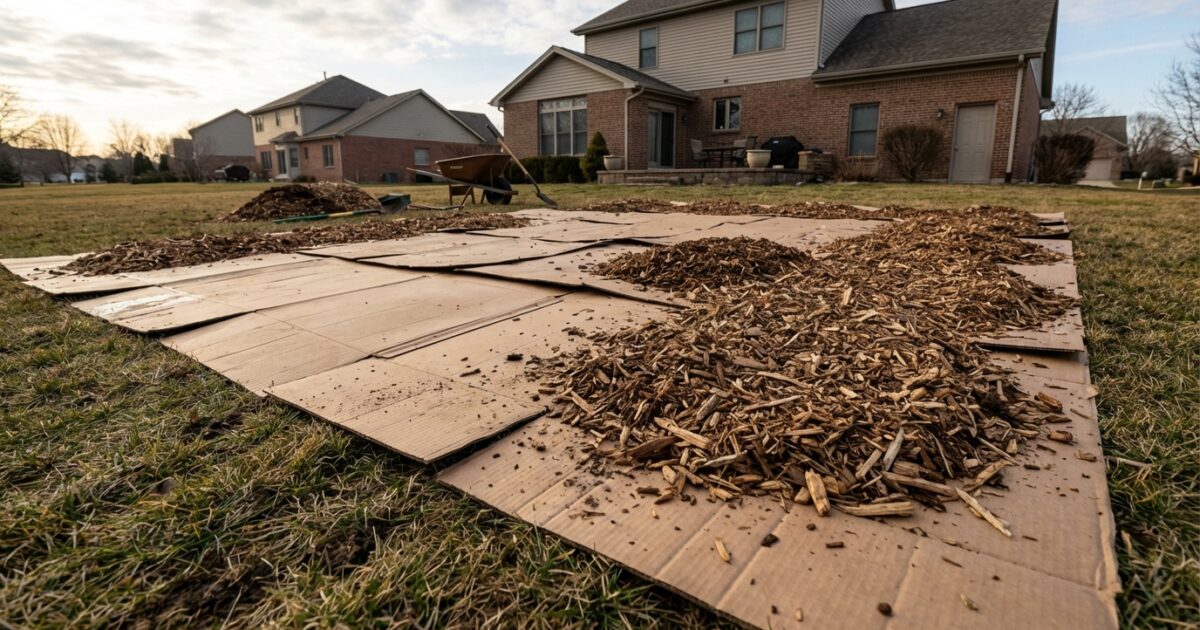
If you’ve recently moved into a home with a patchy, weed-infested lawn, you’re facing a common challenge that can feel overwhelming. The good news is that you don’t need expensive chemicals or professional services to transform your yard. The cardboard method, also known as sheet mulching or cardboard smothering, offers an effective, eco-friendly solution that kills weeds naturally while preparing your soil for a beautiful new lawn.
This technique works by blocking sunlight and air from reaching existing vegetation, essentially suffocating weeds and grass over time. Unlike chemical herbicides, cardboard breaks down into organic matter that actually improves your soil structure, making it an investment in your lawn’s long-term health.
Understanding the Cardboard Smothering Process
The cardboard method creates an impermeable barrier that prevents photosynthesis while maintaining soil moisture underneath. As the cardboard gradually decomposes, it adds carbon to your soil and encourages beneficial earthworm activity. This process typically takes three to six months to completely kill established vegetation, depending on the types of weeds and grass you’re targeting.
Most annual weeds will die within four to eight weeks, while perennial weeds and established grass may require the full six-month period. Deep-rooted weeds like dandelions or thistle might need additional treatment even after the cardboard process is complete.
Selecting the Right Cardboard Materials
Not all cardboard is suitable for lawn renovation. You’ll want to source large, flat pieces that are free from waxy coatings, glossy finishes, or excessive tape and staples. Moving boxes from appliance stores, furniture retailers, or your recent move work perfectly. Avoid pizza boxes or food containers that may contain grease or food residue.
Remove all tape, staples, and labels before laying the cardboard. While small amounts of paper tape are acceptable, plastic packing tape should be completely removed as it won’t decompose. Plan to cover your entire problem area with overlapping pieces, so gather more cardboard than you think you’ll need.
Step-by-Step Installation Guide
Begin by mowing your existing lawn as short as possible, removing any large debris or rocks. You don’t need to remove the cut grass clippings, as they’ll add organic matter under the cardboard. Water the area thoroughly if the soil is dry — moisture helps the decomposition process and makes the cardboard easier to work with.
Lay cardboard pieces directly over the vegetation, overlapping edges by at least six inches to prevent weeds from growing through gaps. Work systematically across your yard, ensuring complete coverage. The cardboard should lie flat against the ground, so step on it or use a rake to eliminate air pockets.
Once your cardboard layer is complete, wet it down thoroughly with a sprinkler or hose. The cardboard should be saturated but not floating. This initial watering helps the material conform to ground contours and begins the decomposition process.
Cover the wet cardboard with two to four inches of organic mulch such as wood chips, straw, or shredded leaves. This mulch layer prevents the cardboard from drying out, holds it in place during wind, and provides additional organic matter as it decomposes. You can often obtain free wood chips from local tree services or municipal programs.
Pet Safety During the Process
The cardboard method is inherently pet-safe, as it doesn’t involve chemicals that could harm your dogs or cats. However, you should take precautions during the installation and waiting period. Fresh cardboard edges can be sharp, and pets might be curious about the new materials in their territory.
Keep pets away from the work area during installation to prevent them from walking on wet cardboard, which could tear or shift. Once the mulch layer is applied, most pets can safely walk across the covered area, though you might notice them investigating the new textures and smells.
Monitor your pets for any unusual behavior, such as excessive digging in the mulched areas or attempting to eat the cardboard. While cardboard itself isn’t toxic, you don’t want pets consuming large amounts or ingesting any remaining tape or staples you might have missed.
Timeline and Maintenance Expectations
Your cardboard installation will look like a construction zone initially, but this appearance is temporary. Within two to three weeks, the cardboard begins breaking down and the mulch layer starts settling. By six to eight weeks, annual weeds underneath will be dead, and the cardboard will be noticeably softer.
Monitor the coverage throughout the process, adding more mulch if wind or rain exposes cardboard edges. In areas with heavy rainfall, you might need to weigh down corners with rocks or additional mulch to prevent lifting. Dry climates may require periodic watering to keep the decomposition process active.
After three to four months, you can begin testing small areas by pulling back mulch and cardboard to check the condition of underlying vegetation. Dead grass and weeds should lift away easily, revealing dark, healthy soil beneath.
Preparing for New Grass Installation
Once your cardboard has done its work, you’ll have significantly improved soil ready for new grass. Remove any remaining large pieces of cardboard, though small fragments can be worked into the soil as they’ll continue decomposing. The existing mulch can be partially incorporated into the soil or moved aside depending on your new grass installation method.
For seeding, lightly till the top two to three inches of soil, mixing in some of the decomposed organic matter. This creates the ideal seedbed texture while preserving the soil improvements from your cardboard process. For sod installation, you may need to add a thin layer of topsoil to create a level surface.
Test your soil pH and nutrient levels before planting, as the decomposition process may have altered soil chemistry. Most grass types prefer slightly acidic to neutral soil, and you can adjust pH with lime or sulfur applications if needed.
Alternative Renovation Methods
While the cardboard method is highly effective, other approaches might suit specific situations better. Solarization uses clear plastic sheeting to create heat that kills vegetation, working faster in hot climates but requiring summer timing and complete sunlight exposure.
Chemical herbicides offer quicker results, typically killing vegetation within two to three weeks, but they don’t improve soil structure and may require multiple applications for persistent weeds. Mechanical removal through tilling or sod cutting provides immediate results but often brings weed seeds to the surface and can be physically demanding for large areas.
For small problem areas or spot treatment, hand-pulling weeds after rain or irrigation can be effective, especially when combined with immediate overseeding of desired grass varieties.
Cost Analysis and Budget Planning
The cardboard method represents one of the most economical approaches to lawn renovation. Your primary expenses include cardboard (often free from local businesses), mulch ($30-60 per cubic yard), and eventual grass seed or sod. For a typical 1,000 square foot area, expect to spend $100-300 total, compared to $800-2,000 for professional chemical treatment and reseeding.
Labor costs favor the DIY approach significantly, though the cardboard method requires patience rather than intensive physical work. Professional lawn renovation services typically charge $1-3 per square foot, making the cardboard method attractive for budget-conscious homeowners willing to wait for results.
Optimal Timing for Best Results
Spring installation allows the cardboard process to work through summer, preparing your lawn for fall seeding when grass establishes most successfully. Fall installation works well in mild climates, giving you a head start for spring planting. Avoid starting during extreme weather periods when maintaining proper moisture levels becomes challenging.
Consider your grass type when timing the process. Cool-season grasses like fescue and bluegrass establish best in fall, while warm-season varieties like Bermuda and Zoysia prefer late spring planting. Plan your cardboard installation to align with optimal seeding windows for your chosen grass type.
Common Pitfalls to Avoid
The most frequent mistake is insufficient cardboard overlap, which allows weeds to grow through gaps. Always overlap edges generously and check coverage carefully before adding mulch. Inadequate mulch coverage leads to cardboard drying out and potentially blowing away, so don’t skimp on this crucial layer.
Many homeowners underestimate the time required for complete vegetation death, particularly with established perennial weeds. Rushing to remove cardboard too early often results in weed regrowth and the need to repeat the process. Patient homeowners who wait the full recommended period see dramatically better results.
Avoid using cardboard with excessive printing inks or chemical treatments, as these can potentially affect soil chemistry. When in doubt, choose plain brown cardboard over heavily printed materials, and always remove non-biodegradable elements like plastic tape and metal staples before installation.
By following this methodical approach, you’ll transform your problematic lawn into healthy, fertile ground ready for the grass variety of your choice. The cardboard method requires patience but delivers lasting results that benefit both your wallet and your yard’s long-term health. Your neighbors will appreciate the chemical-free approach, and your family can enjoy the peace of mind that comes with natural lawn renovation methods.