
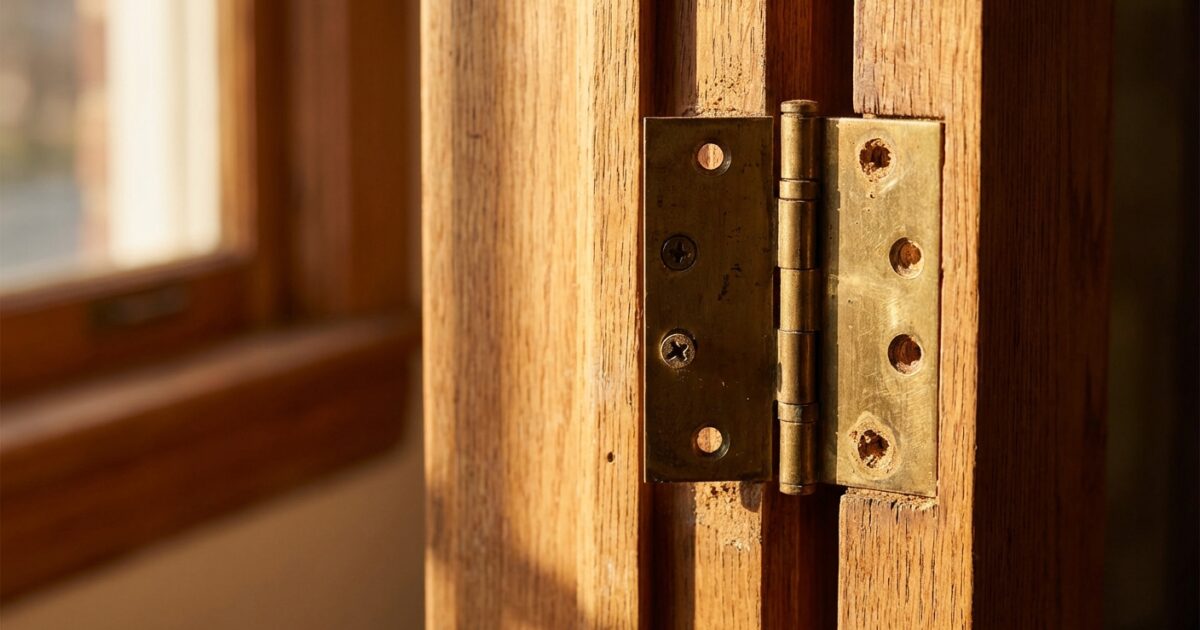
You’ve likely experienced the frustration of a door that won’t stay properly aligned, creaks with every movement, or worse yet, has hinge screws that keep pulling out of the frame. This problem is particularly common with heavy doors like solid wood bathroom doors, exterior doors, or doors with glass panels. When the top hinge starts failing, you’ll notice the door sagging, gaps appearing around the frame, and difficulty closing properly.
The good news is that most loose door hinge problems can be resolved with simple DIY solutions. You don’t need expensive tools or professional carpentry skills to get your doors functioning smoothly again. Let’s explore why this happens and walk through five increasingly robust solutions to fix the problem permanently.
Why Door Hinges Come Loose
Understanding the root cause helps you choose the right repair method. Door hinges typically fail for several reasons:
- Weight stress: Heavy doors create constant downward pressure on the top hinge, causing screws to gradually work loose from the wood fibers
- Worn screw holes: Repeated opening and closing creates micro-movements that enlarge the original screw holes
- Poor initial installation: Short screws that don’t reach solid framing or softwood that can’t support the door’s weight
- Environmental factors: Humidity changes cause wood to expand and contract, loosening the connection over time
- Inadequate hinge capacity: Using standard hinges on doors that exceed their weight rating
The top hinge bears the most stress because it supports the door’s full weight while the bottom hinge primarily keeps the door aligned. This explains why the top hinge screws are usually the first to fail.
Solution 1: Longer Screws and Washers
Start with the simplest approach. Standard hinge screws are often only 3/4 inch long, which may only grip the door jamb and not reach the solid framing behind it.
What you’ll need: 2.5 to 3-inch wood screws (same head type as originals), small washers, drill with bits
Steps:
- Remove the door by lifting it off the hinge pins
- Unscrew the loose hinge from the frame
- Replace at least the top and bottom screws in each hinge with longer screws
- Add small washers under screw heads if the holes are slightly enlarged
- Reinstall and test the door
This solution works best when the screw holes aren’t significantly damaged and you have solid framing behind the jamb. It’s also the most cost-effective fix at under $10.
Solution 2: Wood Filler Method
When screw holes are stripped but not severely damaged, wood filler can provide a solid foundation for new screws. However, avoid products like “Plastic Wood” that remain somewhat flexible—they often fail under the constant stress of a heavy door.
What you’ll need: High-quality wood filler (Bondo Wood Filler or similar), drill bits, screws, sandpaper
Steps:
- Remove the hinge and clean out loose debris from screw holes
- Apply wood filler slightly overfilled, following manufacturer’s instructions
- Allow to cure completely (usually 24 hours for full strength)
- Sand flush with the surface
- Drill new pilot holes and reinstall with appropriate screws
Choose a wood filler that dries hard and won’t compress under load. This method costs $15-20 and provides a durable repair when done properly.
Solution 3: Toothpick and Wood Glue Technique
This old carpenter’s trick is surprisingly effective and uses materials you likely have at home. The wood fibers from toothpicks combined with wood glue create a solid repair that can hold heavy doors.
What you’ll need: Wooden toothpicks, wood glue, utility knife, drill bits, screws
Step-by-step process:
- Remove the loose hinge completely
- Clean out any debris from the stripped holes
- Apply wood glue to several toothpicks
- Insert toothpicks into the hole until it’s completely filled
- Break off excess toothpick length, leaving them slightly proud of the surface
- Apply a drop of glue over the repair
- Allow 24 hours for complete curing
- Trim flush with a utility knife and sand smooth
- Drill a new pilot hole and reinstall the hinge
This method costs less than $5 and often provides a permanent fix. The key is using enough toothpicks to completely fill the void and allowing proper curing time.
Solution 4: Wooden Dowel Repair
For severely damaged screw holes or when you want the most permanent repair, wooden dowels provide superior holding power. This method requires slightly more skill but creates a repair that’s often stronger than the original installation.
What you’ll need: Wooden dowels (1/4 or 3/8 inch), drill bits, wood glue, saw, sandpaper
Process:
- Remove the hinge and assess the damage
- Drill out the damaged screw holes to match your dowel diameter
- Cut dowels to length (slightly longer than hole depth)
- Apply wood glue to dowels and insert firmly
- Allow 24-48 hours for complete bonding
- Trim excess dowel and sand flush
- Mark and drill new pilot holes for screws
- Reinstall hinge with appropriate screws
This repair typically costs $10-15 and provides excellent long-term durability. The fresh wood fibers in the dowel create strong screw threads that can support heavy doors indefinitely.
Solution 5: Hinge Relocation
Sometimes the best approach is to move the hinges to fresh, undamaged wood. This works particularly well when multiple screw holes are damaged or when you’re dealing with an older door that’s had multiple repairs.
Considerations for relocation:
- Move hinges up or down 1-2 inches to find solid wood
- Fill old hinge mortises with wood filler and sand smooth
- Cut new mortises for the relocated hinges
- Ensure proper door alignment and clearances
While more involved, this method gives you a completely fresh start and often reveals whether your hinges are adequate for the door’s weight.
When to Upgrade to Heavy-Duty Hinges
If you’re repeatedly having problems with standard hinges, consider upgrading to heavy-duty versions designed for your door’s weight. Look for these features:
- Ball bearing construction: Reduces friction and wear
- Larger screw holes: Accommodate longer, thicker screws
- Higher weight ratings: Choose hinges rated for at least 25% more than your door’s actual weight
- Non-removable pins: Provide additional security for exterior doors
Quality heavy-duty hinges cost $15-30 each but can eliminate recurring problems with heavy doors. Ball bearing hinges also operate more smoothly and quietly than standard hinges.
Preventive Maintenance Tips
Once you’ve repaired your hinges, these maintenance practices will extend their life:
- Lubricate annually: Use a few drops of 3-in-1 oil or white lithium grease on hinge pins
- Check screws periodically: Tighten any that have worked loose before they damage the wood
- Address door alignment issues promptly: A door that doesn’t close properly puts extra stress on hinges
- Control humidity: Use exhaust fans in bathrooms and maintain consistent indoor humidity levels
Safety Considerations and When to Call a Professional
While most hinge repairs are well within DIY capabilities, certain situations warrant professional attention:
- Structural concerns: If the door frame itself is damaged or pulling away from the wall
- Fire-rated doors: Modifications might compromise their rating
- Security doors: Improper repairs could reduce their effectiveness
- Multiple failed repair attempts: Sometimes underlying issues require professional diagnosis
Always support the door properly when working on hinges, and never work alone on heavy doors that could cause injury if they fall.
Most homeowners can successfully repair loose door hinges using these methods. Start with the simplest solution appropriate for your situation, and don’t hesitate to move to more robust repairs if needed. With the right approach and materials, your doors can function smoothly for many years to come. The small investment in time and materials now will save you from ongoing frustration and potentially costly professional repairs later.