
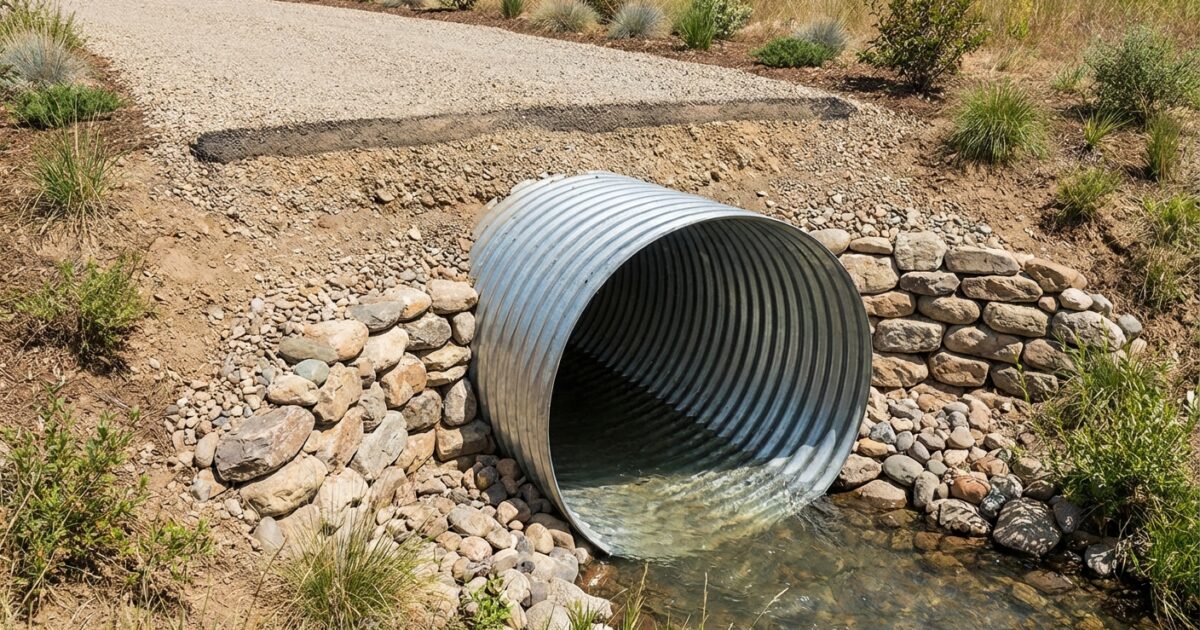
Your property’s culvert might be one of the most important features you never think about—until water starts pooling where it shouldn’t. These underground drainage pipes channel water safely away from your home and property, but when they become clogged or damaged, they can create serious problems that affect everything from your foundation to your property value.
Understanding Culverts and Their Critical Role
A culvert is essentially a tunnel or pipe that allows water to flow under roads, driveways, walkways, or through embankments on your property. Most residential culverts are made from corrugated metal, concrete, or plastic and range from 12 to 48 inches in diameter. They’re designed to handle stormwater runoff, directing it away from structures and preventing erosion.
You’ll typically find culverts under your driveway where it crosses a ditch, beneath walkways that span drainage areas, or anywhere water needs to pass through rather than around an obstacle. Without properly functioning culverts, water can back up, flood your driveway or yard, undermine foundations, and create expensive damage.
Warning Signs Your Culvert Needs Attention
Recognizing problems early can save you thousands in repairs and prevent water damage to your property. Watch for these telltale signs:
- Standing water that doesn’t drain after rain, especially near your driveway or in areas that were previously dry
- Overflow during moderate rainstorms, indicating reduced flow capacity
- Visible sediment buildup at either end of the culvert opening
- Vegetation growth blocking the inlet or outlet
- Driveway settling or cracking above the culvert location
- Erosion around the culvert ends or unusual water flow patterns
- Unpleasant odors from stagnant water trapped in the system
During heavy rains, take note of how water flows around your property. If you notice unusual pooling or redirected flow patterns, your culvert may be partially or completely blocked.
DIY Culvert Cleaning: Step-by-Step Process
Before starting any cleaning project, ensure you have the right tools and safety equipment. You’ll need rubber boots, waterproof gloves, safety glasses, a shovel, rake, and potentially a flashlight or headlamp for visibility.
Manual Cleaning Method
Start by examining both ends of your culvert to assess the blockage. Remove any large debris by hand, including branches, leaves, and trash that may have accumulated at the inlet. Use a rake to pull out smaller debris that’s within arm’s reach.
For sediment buildup, you can often clear significant blockages with a long-handled shovel. Work from the downstream end when possible, as this allows debris to flow out naturally with any water movement. If you can see through the culvert, use a flashlight to identify the extent of blockage before proceeding.
Powered Cleaning Tools
A pressure washer can be highly effective for breaking up packed sediment and washing debris through the system. Set your pressure washer to a moderate setting—too much pressure can damage the culvert material or force debris further into the pipe. Work systematically from the upstream end, allowing water and loosened material to flow toward the outlet.
Wet/dry vacuums designed for outdoor use can remove accumulated water and loose debris. This method works particularly well for smaller culverts or when you need to remove standing water before accessing blockages. Always use a shop vacuum rated for wet pickup and ensure electrical connections remain dry and elevated.
Small drain augers or plumber’s snakes can break through stubborn blockages, especially those caused by root intrusion or compacted organic matter. Feed the auger slowly into the culvert, rotating as you advance. When you feel resistance, work the blockage gently rather than forcing the tool, which could damage the pipe or get stuck.
Flushing the System
After removing visible debris, flush the culvert with clean water to clear remaining sediment and test flow capacity. Use a garden hose on full pressure or, if available, a pressure washer on a gentle setting. Monitor the outlet end to ensure water flows freely and carries out any remaining debris.
Essential Safety Precautions
Culvert cleaning involves several safety risks that require careful attention. Never enter a culvert or put your head inside the opening—confined spaces can contain dangerous gases or collapse unexpectedly. Always work with adequate lighting and consider having someone nearby who knows your location.
Be extremely cautious around electrical equipment when working with water. Use GFCI-protected outlets and keep all electrical connections elevated and dry. If you’re using powered tools during or after rain, wait for conditions to improve.
Watch for signs of structural damage such as cracks, separation at joints, or significant corrosion. These issues require professional assessment and repair. Additionally, be aware that disturbing sediment can release unpleasant odors or potentially harmful bacteria—wear appropriate protective equipment.
When to Call Professionals
Some culvert problems exceed DIY capabilities and require professional intervention. Contact drainage specialists if you encounter structural damage, if the culvert extends more than 50 feet, or if repeated cleaning doesn’t resolve flow problems.
Professional services become necessary when blockages are located deep within the system, when specialized equipment like hydro-jetting or excavation is needed, or when you suspect damage to the culvert structure itself. Additionally, if your culvert connects to municipal storm systems, local regulations may require professional maintenance.
Signs that definitely warrant professional help include visible pipe damage, ongoing settlement issues, recurring blockages despite regular cleaning, and situations where water consistently backs up during normal rainfall.
Preventive Maintenance Strategies
Regular maintenance prevents most serious culvert problems and extends system life significantly. Inspect your culvert at least twice yearly—ideally in spring after winter weather and in fall before heavy rain seasons.
Keep vegetation trimmed around both ends of the culvert, preventing leaves and branches from accumulating in the openings. Install simple screens or grates at the inlet if debris accumulation is a recurring problem, but ensure these don’t become clogged themselves.
Monitor your property’s drainage patterns and address issues that direct excessive runoff toward the culvert. Sometimes simple landscape modifications can reduce the debris load and extend time between cleanings.
Document your maintenance activities and any observed changes in culvert performance. This information helps identify developing problems and provides valuable history for professional contractors if major repairs become necessary.
Cost Considerations
DIY culvert maintenance typically costs between $50 and $200 for tools and materials, depending on what equipment you already own. Basic cleaning supplies, protective gear, and simple tools represent the lower end, while pressure washers or wet/dry vacuums suitable for the task can push costs higher.
Professional cleaning services generally charge $200 to $600 for routine maintenance, depending on culvert length, access difficulty, and severity of blockage. More complex situations requiring specialized equipment or structural repairs can cost significantly more.
Consider the cost of preventive maintenance against potential damage from culvert failure. Water damage to driveways, foundations, or landscaping can easily reach thousands of dollars, making regular maintenance a wise investment.
Property Value and Insurance Implications
Well-maintained drainage systems, including functional culverts, contribute positively to property value by preventing water damage and demonstrating responsible property care. Conversely, drainage problems can significantly impact marketability and sale price.
Many homeowner’s insurance policies specifically exclude damage from poor drainage or maintenance neglect. However, maintaining documentation of regular culvert care can support claims related to sudden storm damage or system failure beyond normal maintenance scope.
When selling your home, functioning drainage systems represent a strong selling point, while visible drainage problems often become negotiation issues or deal-breakers for potential buyers.
Buying Homes with Culverts: What to Inspect
If you’re considering purchasing a property with culverts, thorough inspection during the buying process can prevent future headaches. Walk the entire property during and after rain to observe drainage patterns and identify any problem areas.
Examine culvert openings for signs of damage, blockage, or poor maintenance. Look for rust, cracks, separation at joints, or significant sediment accumulation. Check areas above culverts for settling, cracking, or other signs of structural issues.
Ask sellers about maintenance history and any known drainage problems. Request documentation of recent repairs or professional inspections. Consider hiring a drainage specialist for evaluation if culverts are extensive or you observe potential problems.
Understanding your property’s drainage system and maintaining your culverts properly protects your investment while preventing costly water damage. With regular attention and basic maintenance skills, you can keep these essential systems functioning effectively for years to come. Remember that early intervention almost always costs less than emergency repairs, making routine culvert care one of the most valuable maintenance tasks for any property owner.