
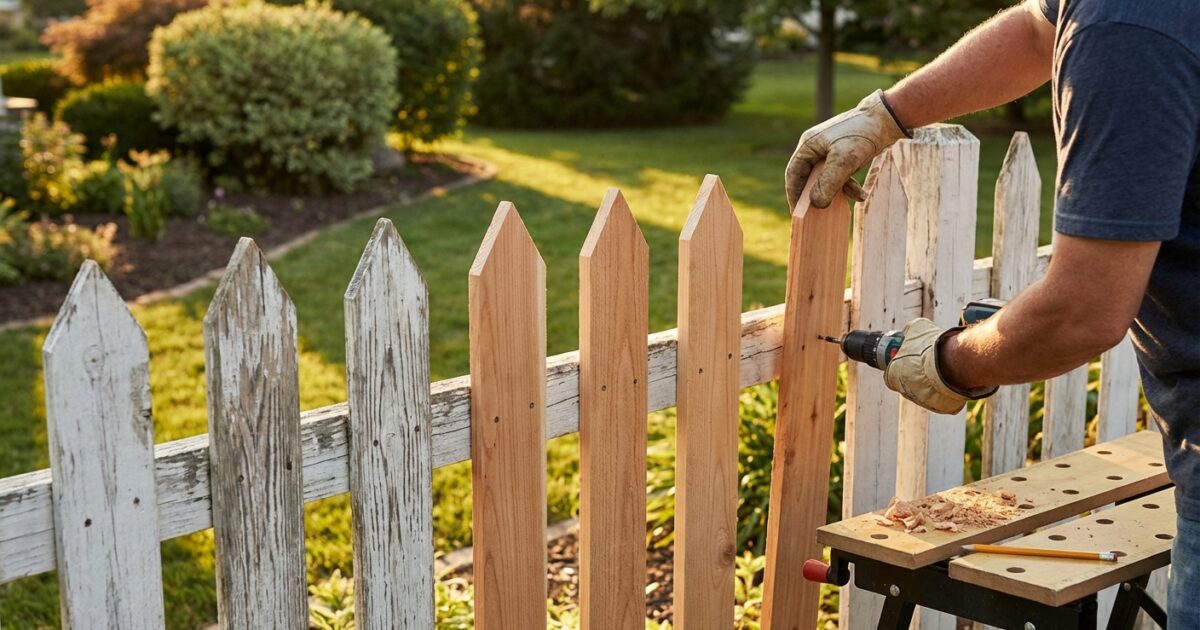
Fence repairs can catch homeowners off guard, especially when storm damage or normal wear creates sudden maintenance needs. Understanding the costs involved in common fence repairs like picket replacement and section removal helps you budget effectively and make informed decisions about your property’s perimeter.
Average Costs for Fence Picket Replacement
Fence picket replacement costs vary significantly based on your fence material, local labor rates, and the scope of your project. Most contractors price picket replacement using either per-picket rates or hourly labor charges.
Per-Picket Pricing Model
When contractors charge per picket, you’ll typically see these ranges:
- Wood pickets: $8–$25 per picket installed
- Vinyl pickets: $12–$35 per picket installed
- Metal pickets: $15–$45 per picket installed
- Chain link fence sections: $25–$60 per linear foot replaced
These prices include both materials and labor. Wood pickets represent the most budget-friendly option, while specialized materials like wrought iron or aluminum command premium prices due to their durability and aesthetic appeal.
Hourly Labor Pricing
Many contractors prefer hourly rates for fence repairs, especially when dealing with multiple damaged areas or complex installation challenges. Expect to pay $45–$85 per hour for professional fence repair labor, with most picket replacement jobs taking 2–4 hours depending on the number of pickets and access conditions.
Factors That Affect Fence Repair Pricing
Several key variables influence your final fence repair costs, and understanding these factors helps you anticipate expenses more accurately.
Fence Material and Style
Your fence material dramatically impacts repair costs. Standard pine or cedar pickets cost significantly less than premium materials like redwood or composite. Decorative fence styles with intricate picket designs or custom spacing requirements increase labor time and material costs.
Fence Height and Accessibility
Taller fences require more materials and longer installation time. Six-foot privacy fences cost 20–40% more to repair than standard four-foot picket fences. Poor accessibility also drives up costs—if contractors must navigate tight spaces, remove landscaping, or work around obstacles like air conditioning units or garden beds, expect additional charges.
Regional Labor Differences
Geographic location significantly affects fence repair costs. Urban areas with higher living costs typically see fence repair rates 25–50% above national averages, while rural regions often offer more competitive pricing. Coastal areas may face premium pricing due to specialized materials needed for salt air resistance.
Fence Section Removal and Disposal Costs
Sometimes fence repairs require removing entire sections rather than individual pickets. This process involves additional labor and disposal considerations.
Removal Labor Costs
Professional fence section removal typically costs $8–$15 per linear foot, depending on fence type and ground conditions. Concrete post removal adds $25–$50 per post if you’re replacing the entire section foundation.
Disposal and Debris Removal
Most contractors include basic debris removal in their pricing, but substantial fence removal projects may incur additional disposal fees ranging from $200–$500 depending on material volume and local disposal regulations. Metal fencing often has scrap value that can offset disposal costs.
DIY vs Professional Installation Considerations
Deciding between DIY fence repairs and professional installation involves weighing costs against time, skill requirements, and potential complications.
DIY Cost Savings
DIY picket replacement can save 60–70% on labor costs, but requires proper tools and techniques. You’ll need a circular saw, drill, level, measuring tape, and potentially a post-hole digger for more extensive repairs. Material costs alone typically range from $3–$12 per picket for common wood types.
When to Call Professionals
Consider professional installation for complex repairs involving structural issues, multiple damaged sections, or specialized materials requiring specific installation techniques. Property line disputes, permit requirements, or utility line concerns also warrant professional expertise to avoid costly mistakes.
Getting Accurate Contractor Quotes
Securing reliable fence repair quotes requires preparation and clear communication with potential contractors.
Quote Preparation Steps
Before contacting contractors, document all damaged areas with photographs and measurements. Count the number of damaged pickets and note any structural issues like loose posts or sagging gates. This preparation helps contractors provide more accurate estimates.
Essential Quote Components
Comprehensive quotes should include material costs, labor charges, disposal fees, and timeline estimates. Request itemized breakdowns to compare different contractor approaches and identify potential cost variations. Ensure quotes specify material grades and installation warranties.
Repair vs Replacement Decision Factors
Determining whether to repair or replace your fence entirely depends on damage extent, fence age, and long-term cost considerations.
Signs You Need Full Replacement
Consider complete fence replacement when more than 30% of pickets need replacement, posts show structural instability, or repair costs exceed 60% of replacement costs. Fences over 15 years old with multiple problem areas often benefit from complete replacement rather than ongoing repair investments.
When Repairs Make Sense
Isolated damage from storms, vehicle impacts, or normal wear typically justifies repair rather than replacement. If your fence structure remains sound and matches your property’s aesthetic needs, strategic repairs can extend fence life by several years at reasonable cost.
Budgeting Strategies for Fence Maintenance
Smart homeowners budget proactively for fence maintenance rather than reacting to emergency repairs.
Annual Maintenance Reserves
Set aside $150–$300 annually for fence maintenance, depending on your fence length and material type. This fund covers routine picket replacements, hardware maintenance, and protective treatments that extend fence life.
Preventive Maintenance Savings
Regular fence inspections and prompt minor repairs prevent costlier problems. Replacing loose pickets immediately prevents storm damage that could affect entire sections. Annual cleaning and sealing treatments for wood fences significantly reduce replacement frequency.
Regional Cost Variations
Understanding your local market conditions helps set realistic repair budgets and expectations.
High-Cost Regions
Metropolitan areas like San Francisco, New York, and Boston typically see fence repair costs 40–60% above national averages due to higher labor rates and stricter building codes. Specialized permit requirements in these areas can add $200–$500 to major repair projects.
Cost-Effective Markets
Rural and suburban areas in the Midwest and South often offer the most competitive fence repair pricing, with costs running 15–25% below national averages. However, material availability may be limited, potentially affecting project timelines.
Fence repairs represent a manageable home maintenance expense when you understand the cost factors and plan appropriately. Whether you choose DIY approaches for simple picket replacements or professional services for complex repairs, informed budgeting ensures your property’s perimeter remains attractive and functional without straining your household finances.