
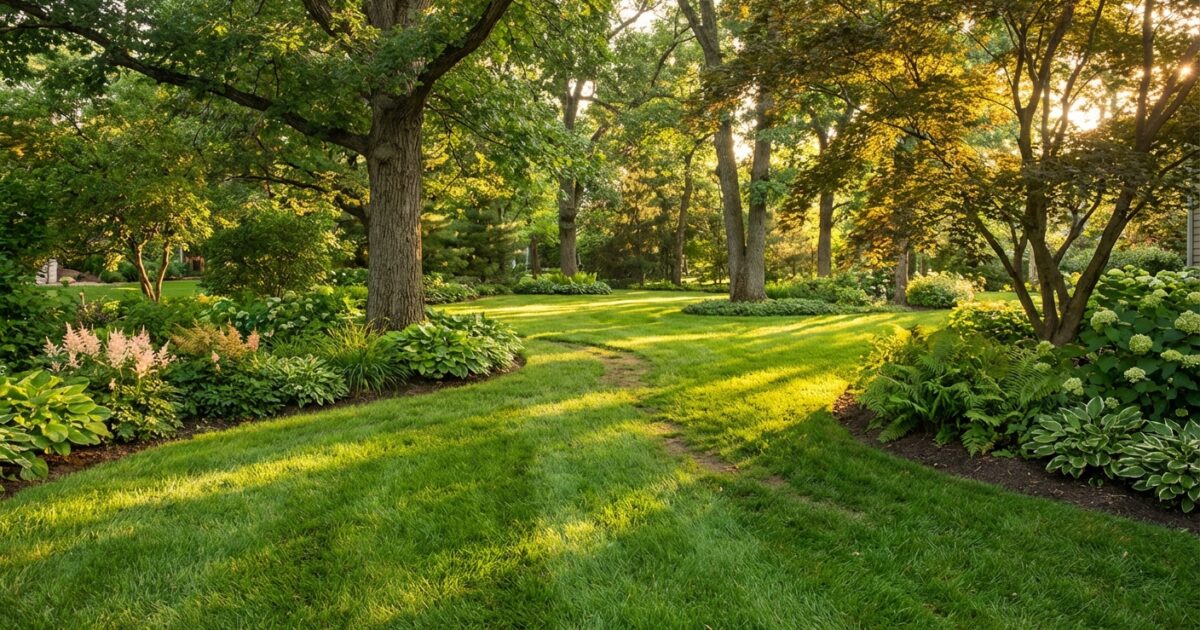
Your yard’s challenging conditions don’t have to mean compromising on curb appeal or outdoor enjoyment. Whether you’re dealing with heavy foot traffic from children and pets, limited sunlight from mature trees, or both, selecting the right grass variety makes the difference between a patchy, struggling lawn and a lush, resilient landscape that enhances your property value and quality of life.
The grass you choose becomes the foundation of your outdoor space, affecting everything from maintenance requirements to how well your family can use the yard. With proper selection and care, even the most challenging conditions can support a healthy, attractive lawn that stands up to daily use while thriving in less-than-ideal light conditions.
Key Factors in Grass Selection
Before diving into specific varieties, you’ll need to evaluate several critical factors that determine which grass will thrive in your unique conditions.
Traffic Tolerance
High-traffic areas require grasses with strong root systems and the ability to recover quickly from wear. Consider how your family uses the space – areas near swing sets, along walkways, and in pet run zones need the most durable options. Grasses with rhizomes or stolons spread laterally to fill in bare spots, while bunch-type grasses may struggle to recover from heavy use.
Shade Requirements
Most grasses need at least four to six hours of direct sunlight daily, but shade-tolerant varieties can thrive with as little as three to four hours. Evaluate your yard throughout the day to understand light patterns, remembering that deciduous trees create seasonal shade variations. Dense, year-round shade from buildings or evergreen trees presents the greatest challenge.
Climate Compatibility
Your regional climate determines whether cool-season or warm-season grasses will perform best. Cool-season grasses peak during spring and fall, while warm-season varieties thrive in summer heat. Understanding your area’s temperature patterns, rainfall, and growing season length guides you toward varieties that will establish successfully and survive seasonal extremes.
Maintenance Requirements
Different grass types demand varying levels of care, from weekly mowing to seasonal overseeding. Consider your available time, budget, and willingness to perform regular maintenance tasks. Some varieties require professional care for optimal performance, while others maintain their appearance with minimal intervention.
Top Grass Varieties for Challenging Conditions
Fine Fescue
Fine fescue stands out as the champion of shade tolerance among cool-season grasses, thriving in areas that receive only three to four hours of filtered sunlight. This low-maintenance option requires less water and fertilizer than most alternatives, making it ideal for homeowners seeking an attractive lawn without intensive care requirements.
Pros: Excellent shade tolerance, drought resistant once established, low maintenance, attractive fine texture, naturally pest resistant
Cons: Lower traffic tolerance than other options, slower to establish, may go dormant in extreme heat, not ideal for heavy play areas
Tall Fescue
While not as shade-tolerant as fine fescue, tall fescue offers superior durability for high-traffic areas. Its deep root system and tough leaf blades make it the go-to choice for families with active children and pets who need a lawn that can handle constant use.
Pros: Exceptional traffic tolerance, drought resistant, handles temperature extremes well, self-repairing through tillering, pest resistant
Cons: Requires more sunlight than fine fescue, coarser texture, may need overseeding in shaded areas, slower germination
Perennial Ryegrass
Known for quick establishment and moderate shade tolerance, perennial ryegrass works well in transitional areas between sun and shade. It germinates rapidly, making it excellent for overseeding thin spots and establishing new lawns quickly.
Pros: Fast germination and establishment, good traffic tolerance, fine texture, stays green longer in cool weather
Cons: Less shade tolerant than fescues, may struggle in extreme heat, requires consistent moisture, shorter lifespan in some climates
St. Augustine Grass
For warm-season climates, St. Augustine grass offers the best shade tolerance while maintaining good durability. Its thick growth pattern helps crowd out weeds, and it spreads through stolons to fill in worn areas naturally.
Pros: Best warm-season shade tolerance, thick growth crowds out weeds, good traffic recovery, salt tolerant
Cons: Requires warm climate, higher water needs, susceptible to certain pests, may become invasive
Zoysia Grass
This warm-season grass develops into a dense, carpet-like lawn that handles moderate shade and heavy traffic. Once established, zoysia requires minimal water and fertilizer while maintaining an attractive appearance throughout the growing season.
Pros: Dense growth pattern, good traffic tolerance, moderate shade tolerance, low maintenance once established, naturally pest resistant
Cons: Very slow establishment, goes dormant in cool weather, expensive to install, may feel coarse underfoot
Regional Climate Considerations
Northern Regions
Cool-season grasses dominate northern landscapes, where temperatures favor spring and fall growth. Fine fescue and tall fescue blends work exceptionally well, with fine fescue handling shaded areas while tall fescue manages high-traffic zones. Consider disease-resistant cultivars to handle humid summer conditions.
Transition Zone
The challenging transition zone between cool and warm climates requires careful variety selection. Tall fescue often performs best, with its ability to handle both summer heat and winter cold. Some areas benefit from overseeding warm-season grasses with cool-season varieties for year-round color.
Southern Regions
Warm-season grasses thrive in southern heat and humidity. St. Augustine grass excels in shaded areas, while zoysia provides durability for high-traffic zones. Consider your area’s specific challenges, such as coastal salt exposure or clay soil conditions.
Installation and Establishment
Successful grass establishment in challenging conditions requires careful attention to soil preparation and planting techniques.
Soil Preparation
Test your soil’s pH and nutrient levels before installation. Most grasses prefer slightly acidic to neutral soil (pH 6.0-7.0), but shade-tolerant varieties often tolerate slightly more acidic conditions. Improve clay soils with organic matter to enhance drainage, while sandy soils benefit from compost to improve water retention.
Seeding vs. Sodding
Seeding costs less and allows you to select specific varieties for your conditions, but requires more time and care during establishment. Sodding provides instant results and better erosion control on slopes, making it ideal for high-traffic areas that need immediate use. In shaded areas, sodding often succeeds where seeding might struggle due to reduced photosynthesis during germination.
Timing Installation
Plant cool-season grasses during their peak growing periods in early fall or early spring. Warm-season grasses establish best in late spring to early summer when soil temperatures reach optimal levels. Avoid installation during extreme weather periods or when drought conditions prevent adequate watering.
Maintenance for Challenging Conditions
Mowing Strategies
Raise your mowing height in shaded areas to maximize leaf surface for photosynthesis. Shade-stressed grass benefits from heights 25-50% taller than sunny area recommendations. Keep blades sharp to prevent tearing, which creates entry points for diseases that thrive in humid, shaded conditions.
Fertilization Adjustments
Reduce nitrogen applications in shaded areas, as excess nitrogen promotes soft growth that’s more susceptible to disease and wear damage. Focus on balanced fertilizers with adequate phosphorus and potassium to strengthen root systems and improve stress tolerance.
Watering Techniques
Water deeply but less frequently to encourage deep root growth. Shaded areas typically require less water due to reduced evaporation, but poor air circulation can create conditions favorable for fungal diseases. Water early in the morning to allow grass blades to dry before evening.
Traffic Management
Create designated pathways in high-traffic areas using stepping stones or mulched trails to concentrate wear in specific zones. Rotate play areas when possible, and consider temporary barriers during establishment periods to allow grass to develop strong root systems.
Alternative Solutions
When grass simply won’t thrive in your conditions, consider these attractive alternatives that provide similar benefits.
Ground Cover Options
Shade-loving ground covers like pachysandra, vinca, or wild ginger create attractive carpets in areas too shaded for grass. These options require less maintenance once established and often provide interesting textures and seasonal interest.
Hardscaping Solutions
Permeable pavers, gravel pathways, or mulched areas can handle heavy traffic while complementing your landscape design. These solutions work particularly well in areas where pets or children create concentrated wear patterns.
Mixed Approaches
Combine grass with other materials to create functional, attractive spaces. Use grass in areas with adequate light and traffic tolerance, while incorporating ground covers, mulched beds, or hardscaping in challenging zones.
Professional Consultation
Consider professional help when dealing with complex drainage issues, extensive grading needs, or when previous grass installations have failed repeatedly. Landscape professionals can conduct detailed site analyses, recommend specific cultivars for your microclimate, and ensure proper installation techniques that maximize your investment’s success.
Local extension offices often provide soil testing services and region-specific variety recommendations based on your area’s unique growing conditions. This localized expertise can save you time and money while ensuring you select varieties proven to perform in your specific environment.
With careful variety selection and proper installation techniques, even the most challenging yard conditions can support a beautiful, functional lawn that enhances your outdoor living experience and property value for years to come.