
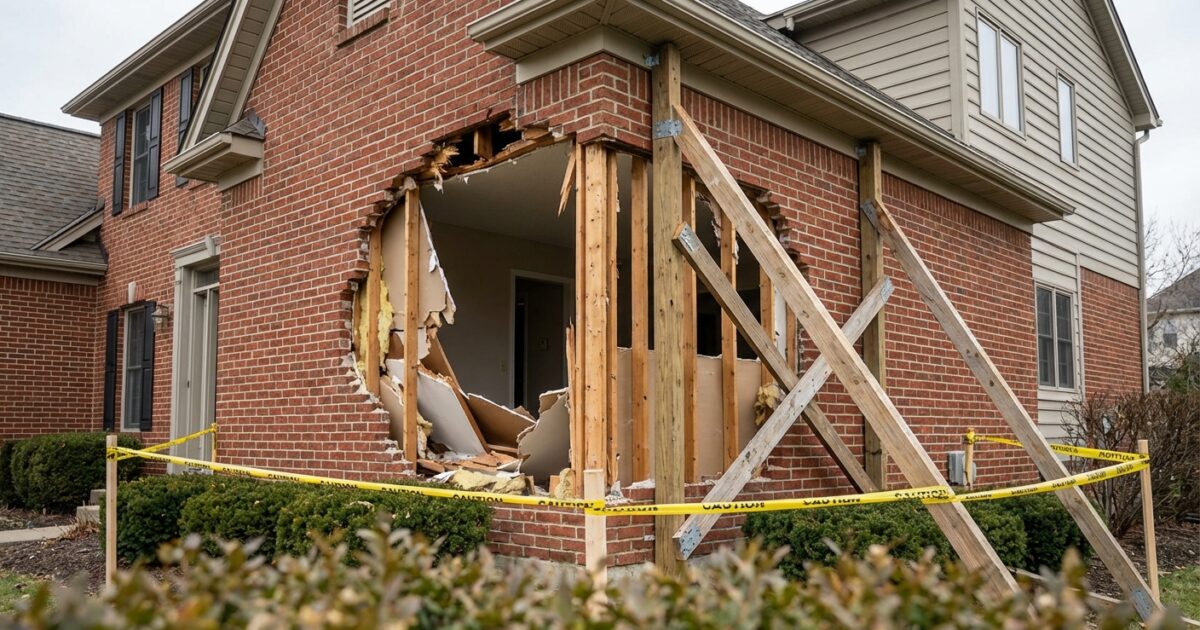
A vehicle crashing into your home ranks among the most shocking and disorienting emergencies you might face as a homeowner or renter. While these accidents happen more frequently than you might expect — particularly at corner properties, homes near busy intersections, or residences backing up to parking lots — most people have never considered how their insurance would respond to such an unusual claim.
Understanding your coverage before disaster strikes can save you thousands of dollars and weeks of confusion during an already stressful time. Here’s everything you need to know about insurance coverage when a car becomes an unwelcome house guest.
Immediate Steps After a Vehicle Impact
Your safety takes absolute priority after any vehicle-into-home accident. Before thinking about insurance claims or property damage, follow these critical steps:
- Evacuate if necessary: If you smell gas, see electrical sparks, notice structural damage like sagging ceilings or cracked support beams, or if the vehicle struck a load-bearing wall, leave the home immediately
- Call 911: Emergency responders need to assess both the driver’s condition and your home’s structural integrity
- Don’t approach the vehicle: The driver may be injured, the car could be unstable, or fuel could be leaking
- Turn off utilities if safe to do so: Shut off gas at the meter and electricity at the main breaker if you can reach them safely
- Document everything: Take photos and videos of all damage from multiple angles, including the vehicle’s position, structural damage, and damaged belongings
- Contact your insurance company: Most insurers have 24-hour claim reporting hotlines
Police will typically file a report and may cite the driver if they were at fault. Request a copy of this report — you’ll need it for insurance claims.
How Homeowner’s Insurance Handles Vehicle Damage
Most homeowner’s insurance policies cover vehicle damage to your home under the “other perils” section, which typically includes events like vandalism, theft, and yes, vehicles crashing into structures. Your dwelling coverage should pay for structural repairs including walls, roofing, windows, doors, and built-in fixtures damaged by the impact.
Here’s what your homeowner’s policy typically covers:
- Structural repairs: Walls, foundation damage, roofing, and flooring repairs
- Built-in fixtures: Damaged cabinets, countertops, or built-in appliances
- Personal property: Furniture, electronics, clothing, and other belongings damaged by the crash
- Additional living expenses: Hotel costs, restaurant meals, and other expenses if your home becomes temporarily uninhabitable
- Debris removal: Costs to remove the vehicle and clean up crash debris
However, your policy’s deductible applies to vehicle damage claims just like any other covered peril. If you carry a $1,000 deductible, you’ll pay the first $1,000 of repair costs out of pocket.
Coverage Limits and Considerations
Your dwelling coverage limit represents the maximum your insurer will pay for structural damage. If repairs exceed this limit, you’ll be responsible for the difference. Personal property coverage typically equals 50-70% of your dwelling coverage amount, though you can often purchase additional coverage for valuable items.
Most policies also include loss of use coverage, which pays for temporary housing and additional living expenses if your home becomes uninhabitable. This coverage usually equals 10-20% of your dwelling coverage limit and continues until repairs are complete or you reach the coverage limit.
Renter’s Insurance Coverage for Vehicle Accidents
As a renter, you won’t receive any insurance money for structural damage to the building — that’s your landlord’s responsibility and should be covered by their property insurance. However, your renter’s insurance policy provides crucial protection for your personal belongings and living situation.
Renter’s insurance typically covers:
- Personal property damage: Your furniture, electronics, clothing, and other belongings damaged by the vehicle impact
- Additional living expenses: Hotel costs and meal expenses if the rental becomes temporarily uninhabitable
- Loss of use: Coverage continues until the landlord completes repairs or you find alternative permanent housing
The same deductible rules apply to renter’s insurance claims. Most renter’s policies carry lower deductibles than homeowner’s policies, typically ranging from $250 to $1,000.
One critical consideration for renters: if the landlord’s property becomes condemned due to structural damage, your renter’s insurance won’t pay for a security deposit or moving costs to a new rental. Consider purchasing additional coverage riders if these expenses concern you.
The At-Fault Driver’s Auto Insurance Role
The driver’s auto insurance should serve as the primary coverage source for vehicle-into-home damage, regardless of whether you own or rent. Property damage liability coverage on auto policies typically ranges from $25,000 to $100,000, though some states require higher minimums.
If the driver carries adequate liability coverage and accepts fault, their insurance should pay for:
- All structural damage to your home
- Damaged personal property
- Additional living expenses
- Cleanup and debris removal costs
This scenario represents the ideal outcome because you won’t pay any deductible, and the claim won’t appear on your homeowner’s or renter’s insurance record.
When Auto Insurance Falls Short
Unfortunately, the at-fault driver’s coverage doesn’t always suffice. Common problems include:
- Insufficient coverage limits: If damage exceeds their liability limits, you’ll need your own insurance for the remainder
- Uninsured drivers: Approximately 13% of drivers lack insurance coverage entirely
- Disputed fault: If the driver claims mechanical failure, medical emergency, or other circumstances beyond their control
- Hit-and-run accidents: When the driver flees the scene and cannot be identified
In these situations, your homeowner’s or renter’s insurance becomes essential. Many policies include coverage for uninsured motorists, though this typically applies only to personal injury rather than property damage.
Condemned Properties and Extended Living Expenses
Vehicle impacts can cause severe structural damage that renders your home temporarily or permanently uninhabitable. Local building officials may condemn the property until repairs are complete, or in extreme cases, declare it a total loss requiring demolition.
Both homeowner’s and renter’s insurance policies include additional living expense coverage for these situations, but understanding the limitations prevents unpleasant surprises:
- Time limits: Coverage typically continues for a “reasonable time” to complete repairs, usually 12-24 months maximum
- Expense limits: Most policies cap living expenses at 10-20% of your coverage limits
- Reasonable and necessary standard: Insurers will only pay for comparable housing and necessary additional costs
If your home requires extensive reconstruction, document all additional living expenses meticulously. Save receipts for hotel bills, restaurant meals, laundry costs, storage unit rentals, and other necessary expenses above your normal living costs.
Common Coverage Gaps and How to Avoid Them
Several coverage gaps commonly surprise homeowners and renters dealing with vehicle damage:
Landscaping and outdoor structures: Many policies limit coverage for damaged landscaping, fences, or detached structures to $500-$1,000. If a vehicle destroys your expensive landscaping or damages a detached garage, standard coverage may prove inadequate.
Code upgrade requirements: If repairs must meet current building codes that didn’t exist when your home was built, standard policies may not cover the additional costs. Ordinance or law coverage endorsements address this gap.
Business property: If you operate a home business, standard homeowner’s or renter’s policies provide minimal coverage for business equipment and inventory. Consider separate business insurance.
High-value items: Jewelry, art, collectibles, and other valuable items often face coverage limits under standard policies. Schedule these items separately for full replacement value coverage.
Working Effectively with Insurance Adjusters
Insurance adjusters evaluate damage and determine settlement amounts, making them crucial allies in your recovery process. Here’s how to work effectively with adjusters:
Prepare comprehensive documentation before the adjuster’s visit. Photograph all damage from multiple angles, create detailed lists of damaged items with purchase dates and values, and gather receipts or appraisals for valuable items.
Be present during the inspection to point out all damage, including items the adjuster might overlook. Don’t hesitate to ask questions about coverage and settlement calculations — adjusters expect this and should explain their reasoning.
If you disagree with the initial settlement offer, you can negotiate. Provide additional documentation supporting your position, such as contractor estimates or replacement cost documentation for personal property.
Consider hiring a public adjuster if damage is extensive or if you’re uncomfortable negotiating with your insurance company. Public adjusters work for you, not the insurance company, and can often secure higher settlements, though they typically charge 10-15% of the settlement amount.
When to Involve Attorneys
Most vehicle-into-home insurance claims resolve without legal intervention, but certain situations warrant attorney involvement:
- The at-fault driver’s insurance company denies coverage or disputes fault
- Your insurance company unreasonably delays the claim or offers an inadequate settlement
- Someone was injured in the accident
- Multiple insurance companies are involved and dispute which policy should pay
- The property damage exceeds available insurance coverage
Property damage attorneys typically work on contingency fees for significant claims, meaning they receive payment only if they secure a settlement or judgment in your favor.
Preventive Measures for Homeowners
While you cannot prevent all vehicle accidents, certain measures reduce your risk and minimize potential damage:
Install protective barriers if your home sits close to a busy street or at a dangerous intersection. Decorative bollards, planters, or low walls can deflect vehicles while enhancing your landscape.
Maintain adequate insurance coverage limits. Dwelling coverage should reflect current replacement costs, not your home’s original purchase price or current market value. Personal property coverage should account for everything you own.
Consider umbrella liability insurance, which provides additional coverage beyond your standard policy limits. For a few hundred dollars annually, umbrella policies typically provide $1-$5 million in additional protection.
Create and maintain a home inventory documenting your possessions with photos, videos, and receipts. Store this inventory in cloud storage or a safety deposit box so it survives if your home is severely damaged.
Review your insurance coverage annually and update it as needed. Home improvements, major purchases, and changing reconstruction costs all affect your coverage needs.
Vehicle-into-home accidents create complex insurance scenarios involving multiple policies and coverage types. By understanding your protection before an accident occurs and knowing how to respond immediately afterward, you’ll be better prepared to navigate the claims process and recover from this traumatic event. Remember that insurance companies are in business to pay valid claims, but they also rely on policyholders to understand their coverage and follow proper procedures.