
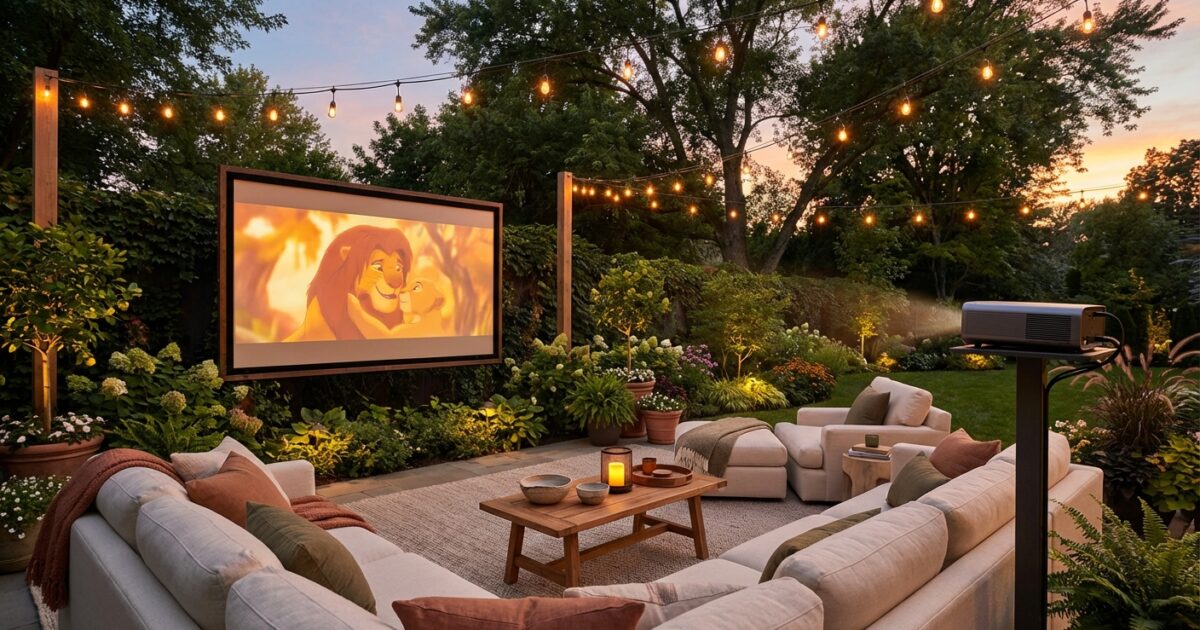
An outdoor home theater transforms your backyard into a magical entertainment destination where you can enjoy movies under the stars with family and friends. Whether you’re hosting a neighborhood gathering or creating intimate family movie nights, the right setup combines cutting-edge technology with the natural ambiance of outdoor living.
The appeal of outdoor cinema extends beyond entertainment value. A well-designed outdoor theater space can significantly enhance your property’s appeal and market value, creating an additional living area that extends your home’s footprint into the landscape.
Essential Equipment for Your Outdoor Theater
Building an effective outdoor home theater requires four core components: a projector, screen, audio system, and media source. Each element plays a crucial role in delivering an immersive viewing experience that rivals indoor entertainment systems.
Choosing the Right Projector
Your projector selection determines the foundation of your viewing experience. For outdoor use, you’ll need higher brightness levels than indoor projectors to combat ambient light. Look for projectors with at least 3,000 lumens for decent performance, though 4,000-5,000 lumens provides optimal clarity for most outdoor conditions.
Consider these projector categories based on your budget and needs:
- Budget-friendly options: Basic LCD projectors offer good value for occasional use, typically ranging from $300-800
- Mid-range choices: DLP projectors provide better color accuracy and contrast, usually priced between $800-2,000
- Premium selections: Laser projectors deliver exceptional brightness and color reproduction, with prices starting around $2,000
Screen Selection and Setup
Your screen choice dramatically impacts image quality and viewing comfort. Portable screens offer flexibility for seasonal use, while permanent installations provide convenience and durability. Screen sizes typically range from 100 to 150 inches for backyard viewing, with larger screens requiring more powerful projectors.
Inflatable screens work well for casual setups and easy storage, while fixed-frame screens provide superior image quality with taut, wrinkle-free surfaces. Consider your available space, storage capacity, and frequency of use when making this decision.
Audio Solutions That Won’t Disturb Neighbors
Quality audio completes the cinema experience without creating neighborhood tensions. Wireless speakers offer placement flexibility, allowing you to position sound sources strategically around your seating area. Look for weather-resistant models with good battery life for portable setups.
For permanent installations, consider in-ground subwoofers that deliver deep bass without directional sound projection. Soundbars designed for outdoor use provide excellent dialogue clarity while maintaining compact profiles that won’t dominate your outdoor aesthetic.
Weather Protection and Durability
Outdoor equipment faces unique challenges from weather, temperature fluctuations, and humidity. Protecting your investment requires proactive planning and appropriate equipment selection.
Choose projectors with IP65 or higher ratings for dust and water resistance. Many manufacturers now offer outdoor-specific models designed to withstand temperature extremes and moisture exposure. For non-weatherproof equipment, invest in quality protective enclosures or plan for easy storage between uses.
Your screen material should resist mildew, fading, and tearing from wind exposure. PVC-coated fabrics and specialized outdoor screen materials maintain image quality while withstanding environmental stresses.
Installation Considerations and Setup Tips
Successful outdoor theater installation requires careful attention to power requirements, connectivity, and equipment placement. Plan your electrical needs early in the process, ensuring adequate power outlets near your equipment locations.
Power and Connectivity Requirements
Most outdoor theater setups require multiple power sources for projectors, audio equipment, and media players. Consider installing weatherproof GFCI outlets in strategic locations to avoid running extension cords across walkways. Wi-Fi signal strength becomes critical for streaming services, so you may need to install a wireless extender or mesh network node in your outdoor area.
Optimal Equipment Placement
Projector placement affects both image quality and equipment protection. Position your projector to minimize ambient light interference while ensuring easy access for maintenance. The throw distance – the space between projector and screen – determines your equipment layout and affects image sharpness.
Audio equipment placement requires balancing sound quality with neighbor considerations. Strategic speaker positioning can direct sound toward your seating area while minimizing noise projection beyond your property boundaries.
Seating Solutions for Comfort and Style
Comfortable seating transforms your outdoor theater from a novelty into a genuine entertainment destination. Your seating choices should balance comfort, durability, and storage convenience.
Portable options include high-quality camping chairs, inflatable loungers, and outdoor cushions that store easily when not in use. For more permanent solutions, consider weather-resistant sectional furniture, built-in seating areas, or even outdoor home theater seating designed specifically for backyard cinemas.
Raised seating platforms can improve sightlines for larger groups while creating defined entertainment zones in your landscape design.
Lighting Design for Ambiance
Thoughtful lighting enhances the outdoor theater experience without compromising screen visibility. Warm, low-level lighting creates ambiance while allowing eyes to adjust to screen brightness.
Path lighting ensures safe movement during movies, while accent lighting on landscape features maintains visual interest without screen interference. Solar-powered options provide energy-efficient solutions that automatically adjust to darkness levels.
Avoid lighting that directly illuminates the screen area or creates glare for viewers. String lights, lanterns, and landscape lighting should enhance the atmosphere while maintaining optimal viewing conditions.
Seasonal vs. Permanent Installation
The choice between seasonal setup and permanent installation depends on your climate, storage capacity, and frequency of use.
Seasonal setups offer maximum flexibility, allowing you to adapt your theater configuration for different events and weather conditions. This approach works well for occasional users or those with limited storage space. However, setup and breakdown time can discourage spontaneous use.
Permanent installations provide convenience and encourage regular use. Weather-resistant equipment remains ready for immediate use, making impromptu movie nights effortless. This approach requires higher initial investment and dedicated outdoor storage or weather protection.
Budget Planning and Investment Levels
Outdoor home theater costs vary dramatically based on equipment quality and installation complexity. Understanding different investment levels helps you create a system that matches your needs and budget.
Basic setups ($800-1,500) include entry-level projectors, portable screens, and basic audio systems suitable for occasional family use. These systems provide good entertainment value while keeping initial costs manageable.
Mid-range systems ($1,500-4,000) incorporate better projectors, quality screens, and enhanced audio with weather-resistant components. This investment level supports regular use with improved image and sound quality.
Premium installations ($4,000-10,000+) feature high-end projectors, permanent screens, sophisticated audio systems, and professional installation. These systems deliver cinema-quality experiences with maximum convenience and durability.
Common Setup Mistakes to Avoid
Learning from common outdoor theater mistakes can save you time, money, and frustration. Many homeowners underestimate the importance of ambient light control, leading to washed-out images during twilight hours. Plan your viewing schedule around complete darkness or invest in higher-brightness projectors.
Inadequate power planning creates safety hazards and equipment limitations. Extension cords across walkways pose trip hazards and may not provide sufficient power for high-performance equipment.
Ignoring neighbor considerations can create lasting relationship problems. Sound travels farther outdoors, especially during evening hours when most movie viewing occurs.
Maintenance and Equipment Care
Regular maintenance extends equipment life and maintains performance quality. Clean projector filters monthly during active seasons to prevent overheating and maintain image brightness. Screen cleaning requires gentle techniques to avoid damage to specialized coatings.
Seasonal equipment storage should include thorough cleaning, moisture removal, and protective covering. Battery-powered devices require periodic charging even during storage periods to maintain battery health.
Weather monitoring becomes part of your routine, ensuring equipment protection during unexpected storms or extreme temperature events. Developing maintenance habits early prevents costly repairs and extends your outdoor theater investment.
Creating an outdoor home theater opens up new possibilities for family entertainment and social gatherings while adding lasting value to your property. With careful planning and appropriate equipment selection, you can build an outdoor cinema that provides years of memorable experiences under the open sky.