
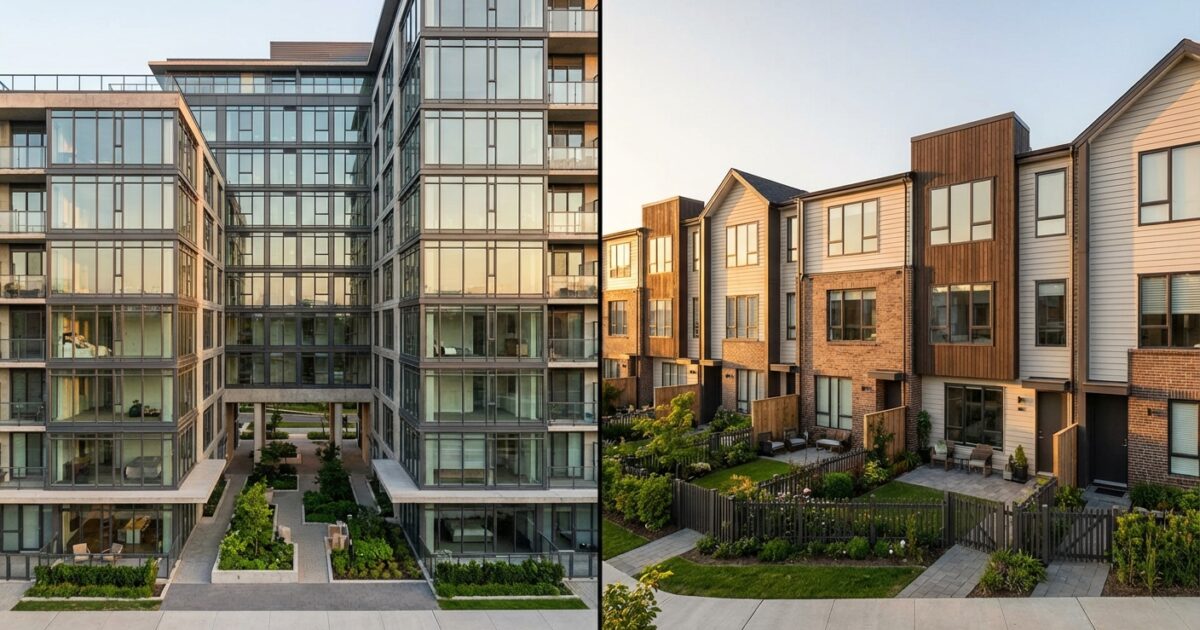
When you’re house hunting, the choice between a condo and townhouse can feel overwhelming. Both property types offer distinct advantages, but they come with very different ownership structures, financial obligations, and lifestyle implications. Understanding these differences will help you make a decision that aligns with your budget, lifestyle, and long-term goals.
Understanding Property Ownership Structures
The fundamental difference between condos and townhouses lies in what you actually own when you purchase the property.
Condo Ownership
When you buy a condo, you own the interior space of your unit—everything from the drywall inward. The building structure, roof, exterior walls, hallways, elevators, and common areas belong to the homeowners association (HOA). You receive a deed for your specific unit and share ownership of common elements with other unit owners.
This ownership structure means you have limited control over exterior modifications or structural changes. You can renovate your interior space (within HOA guidelines), but you cannot alter windows, balconies, or exterior doors without approval.
Townhouse Ownership
Townhouse ownership typically includes both the interior and exterior of your unit, plus the land it sits on. You own your roof, exterior walls, front and back yards (if applicable), and often your driveway or parking space. While many townhouses are part of HOA communities, your ownership extends beyond just the interior space.
This broader ownership gives you more freedom to make exterior modifications, landscape your yard, or add features like decks or patios, though HOA restrictions may still apply.
Maintenance and Responsibility Differences
Your ownership structure directly impacts your maintenance obligations and costs.
Condo Maintenance
Condo living offers convenience through shared maintenance responsibilities. The HOA handles exterior maintenance, roof repairs, landscaping, snow removal, and building systems maintenance. You’re only responsible for maintaining your interior space, including appliances, flooring, paint, and fixtures.
However, this convenience comes at a cost. Monthly HOA fees cover these services, and you have no control over maintenance timing, quality, or vendor selection. If the building needs a new roof or major repairs, you’ll pay your share through HOA fees or special assessments.
Townhouse Maintenance
Townhouse maintenance responsibilities vary by community. In some developments, the HOA maintains exteriors and landscaping, similar to condos. In others, you’re responsible for your roof, siding, driveway, and yard maintenance.
This means more work and potentially higher costs, but also more control. You can choose when to replace your roof, what landscaping to install, and which contractors to hire. You’ll need to budget for these expenses independently rather than paying monthly fees.
Space and Privacy Considerations
Condos and townhouses offer different living experiences in terms of space utilization and privacy.
Condos typically maximize efficient use of square footage with open floor plans and shared walls on multiple sides. You may have neighbors above, below, and on both sides. Storage space is often limited, and outdoor space may be restricted to small balconies or patios.
Townhouses usually provide more space overall, often featuring multiple floors with traditional room layouts. You typically share walls only on the sides and may have private outdoor space like yards or patios. Storage is generally more abundant with basements, garages, or additional closets.
Financial Considerations Beyond Purchase Price
The true cost of ownership extends far beyond your down payment and monthly mortgage.
Monthly Carrying Costs
Condo fees typically range from $200 to $800 monthly, depending on amenities and services included. These fees cover building maintenance, landscaping, common area utilities, insurance on common areas, and amenities like pools or fitness centers. Fees tend to increase over time as building components age and require replacement.
Townhouse HOA fees are generally lower, often $50 to $300 monthly, since you’re responsible for more maintenance yourself. However, you’ll need to budget separately for roof repairs, exterior painting, HVAC maintenance, and yard care—expenses that condo fees typically cover.
Long-term Financial Planning
Consider these ongoing costs when comparing properties:
- Reserve funds: Well-managed condos maintain adequate reserves for major repairs. Ask to see reserve studies and recent financial statements.
- Special assessments: Both property types may levy special assessments for unexpected repairs or improvements. Condos may assess for building-wide issues; townhouse communities for common area improvements.
- Insurance costs: Condo insurance (HO-6) typically costs less than townhouse insurance (HO-3) since the building structure is covered by master policies.
- Utility expenses: Townhouses often have higher utility costs due to more space and individual systems, while condos may benefit from shared heating/cooling systems.
Evaluating HOA Financial Health
Before purchasing either property type, thoroughly evaluate the HOA’s financial management.
Key Documents to Review
Request these financial documents during your due diligence period:
- Annual budget and financial statements from the past three years
- Reserve study showing planned maintenance and funding adequacy
- Meeting minutes from recent board meetings
- Assessment history and any planned special assessments
- Delinquency reports showing percentage of owners behind on fees
Red Flags to Avoid
Walk away from properties with these warning signs:
- Reserve funds below 25% of annual operating budget
- History of frequent special assessments
- Delinquency rates above 15%
- Significant deferred maintenance visible during tours
- Rapidly increasing fees without corresponding improvements
- Pending litigation involving the HOA
Location vs. Property Type Trade-offs
Sometimes you’ll need to choose between your preferred property type and ideal location.
Urban Areas
City centers typically offer more condo options due to land constraints and development patterns. Condos provide urban conveniences like walkability, public transit access, and proximity to employment centers. However, you’ll pay premium prices for less space.
Suburban Communities
Suburbs offer more townhouse developments with family-friendly amenities, better schools, and larger living spaces. However, you may face longer commutes and higher transportation costs. Consider how commute time and expenses impact your overall budget and quality of life.
Questions to Ask When Viewing Properties
For Both Property Types
- What’s included in monthly fees and what are you responsible for?
- How often have fees increased over the past five years?
- Are there any pending special assessments or major repairs planned?
- What amenities are available and how often do you realistically expect to use them?
- What are the rental restrictions if you want to lease the property later?
Condo-Specific Questions
- What are the noise policies and how are violations handled?
- Are there restrictions on renovations or modifications?
- How is parking allocated and is it included in the fee?
- What’s the building’s pet policy?
Townhouse-Specific Questions
- What exterior modifications are allowed?
- Who maintains common areas versus individual responsibilities?
- Are there landscaping requirements or restrictions?
- What are the parking arrangements?
Decision Framework for First-Time Buyers
Use this prioritization framework to guide your decision:
Choose a Condo If:
- You prioritize low-maintenance living and convenience
- Urban location and walkability are essential
- You have a limited budget for ongoing maintenance
- You travel frequently and want minimal property responsibilities
- Building amenities like pools, gyms, or concierge services add value to your lifestyle
Choose a Townhouse If:
- You want more control over your living environment
- You need more space for family or storage
- You enjoy yard work and outdoor space
- You plan to stay long-term and want better appreciation potential
- You prefer suburban lifestyle and don’t mind commuting
Investment Potential and Resale Considerations
Both property types can appreciate well, but market dynamics differ. Condos may be more susceptible to market downturns and can be harder to finance (lenders have stricter requirements for condo loans). Townhouses typically appreciate more consistently and appeal to a broader buyer pool including families seeking more space.
Consider your timeline and exit strategy. If you plan to sell within five years, factor in transaction costs and potential appreciation. For longer holds, focus on neighborhoods with strong fundamentals like good schools, job growth, and infrastructure improvements.
The right choice between a condo and townhouse depends on your unique situation, priorities, and long-term goals. Take time to honestly assess your lifestyle preferences, financial capacity, and maintenance comfort level. Visit multiple properties of each type and talk to current owners about their experiences. Remember that this decision will impact your daily life and financial picture for years to come, so choose the option that best aligns with both your current needs and future aspirations.